I admit it: I have a tendency to get into certain games. Really into them. I have spent over a thousand hours in Borderlands 2, the same in Warframe, and hundreds more in Skyrim, Ace Combat 7, and Elden Ring. But nothing compares to Destiny 2. As I write this in 2026, my counter is frozen at 2,850 hours. That is almost four full months of real time, a third of a year, spent on a single game. And I think, finally, I am tired of it.

A Pandemic-Shaped Obsession
I started playing Destiny 2 in the fall of 2019 with a group of friends. Just months later, a little virus upended my social life and the entire world. During lockdown, Destiny became my biggest social engagement. I could not do much else for a year, so I fought the enemies of humanity across the solar system instead. I kept reading horror stories about people going stir crazy indoors, but I could not relate. I was never more than a few clicks away from a raid, a Nightfall, or a Crucible match.
Destiny 2 was a lot of fun. It remains perhaps the best shooter I have ever played. The story was engaging, the mechanics were intriguing, and the guns—my god, the guns. There was endless loot to chase for hours upon hours, punctuated by Exotic rewards that never failed to make me whisper 'wow' as I melted a room full of alien monstrosities.
The Live-Service Trap: Always Something to Do
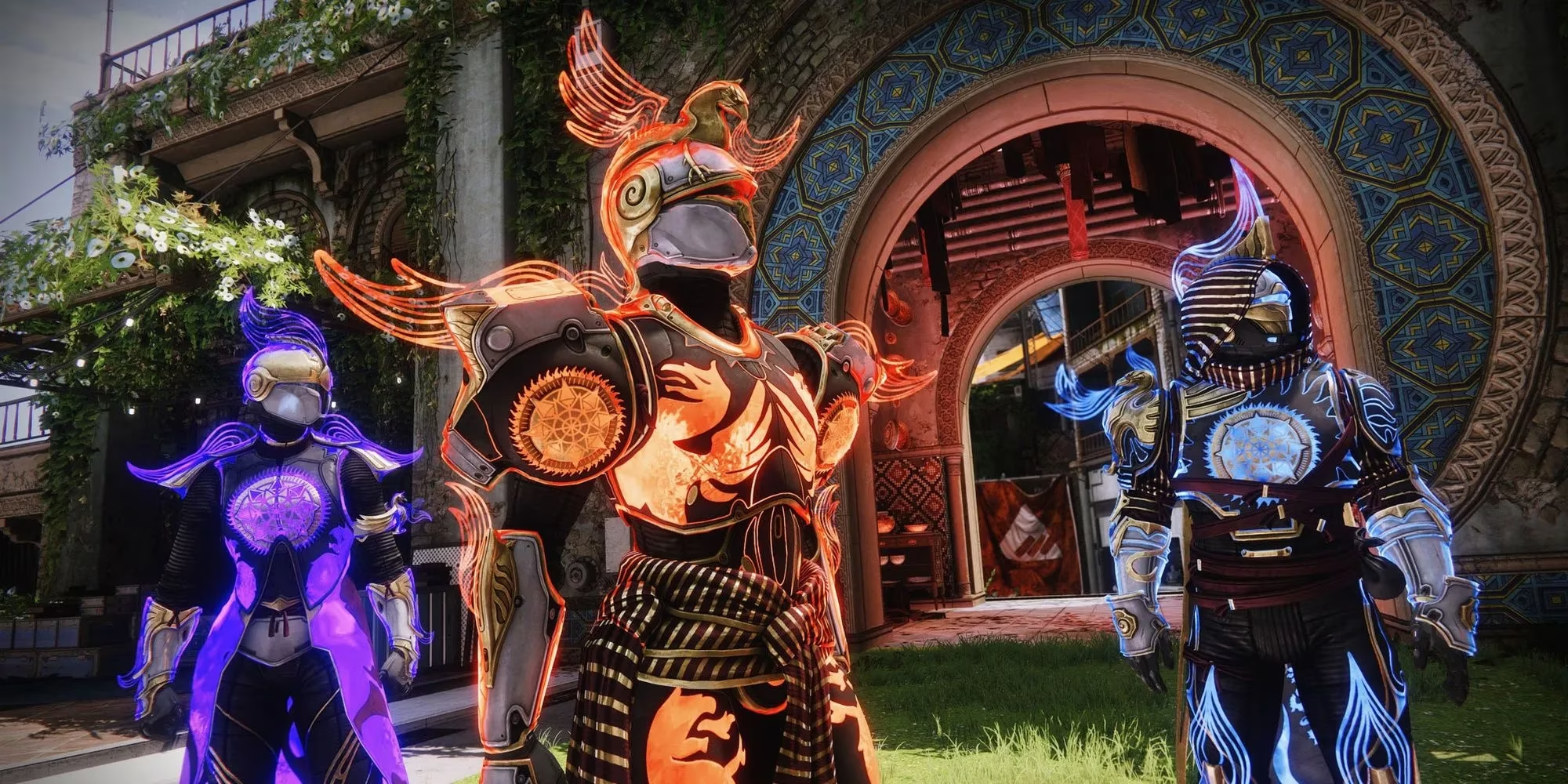
I cannot entirely blame the pandemic for the time I spent in Destiny. There are plenty of other games. But among all the live-service games I have played, Destiny 2 is perhaps the most pernicious in its trappings. There is always something to do: weapons to grind, armor to farm, titles to unlock, Emblems, Ghost Shells, and Sparrows locked behind extremely difficult challenges. The list goes on.
Every new system Bungie added over the years only added more. Sunsetting capped the power levels of weapons and armor to force players to grind for new ones. Players revolted when the new guns turned out to be the same as the sunsetted ones, and Bungie reversed the decision after a single season. But Origin Traits and Artifice Armor effectively accomplish the same end. Then came Seasonal Challenges, which provided as much Bright Dust as the previous weekly system but took even more time. Armor Synthesis and its bounties demanded so many Strikes, Nightfalls, Gambit matches, Crucible matches, dungeons, or raids. Weapon crafting required such a time investment that normal players should not expect their god rolls for weeks, if not months.
Is it any wonder that I began to see the code in the machine? To paraphrase The Matrix, the illusion started to crack. If you want everything, you must give Destiny 2 everything. At first, I was happy to devote all my leisure time to it. But as time wore on, a nagging doubt grew: what was I missing? Actually, many other somethings. I did not play Hades, Animal Crossing, It Takes Two, Psychonauts 2, Tony Hawk's Pro Skater 1 + 2, Death's Door, Deathloop, Metroid Dread, Hitman 3, Monster Hunter Rise, Yakuza: Like a Dragon, The Forgotten City, or Marvel's Guardians of the Galaxy. I did not care because Destiny had already claimed my free time.
What Finally Broke the Spell
Even with all that, I might still be playing if not for several recent changes. The new subclass reworks were generally good, but in my infinite wisdom, I chose the weakest of the three reworked classes: Void Titan during Season of the Risen and Solar Warlock during Season of the Haunted. Then came the Duality dungeon. Seemingly designed to test Destiny veterans, it was so jam-packed with high-health enemies and intricate mechanics that it felt more like a raid that handicapped fireteams at three Guardians instead of six. I beat it. It was not fun.
What finally broke me out of Destiny's clutches was Elden Ring. A largely solo experience, its main game lasted about 100 hours. I enjoyed it so much that I played a second character through. But now I have had my fill of The Lands Between, and I will move on to something new. That is the difference between a game like Elden Ring and a game like Destiny. Elden Ring offers everything up front, a journey you can take at your own pace. Destiny 2 locks its rewards behind arbitrarily long time sinks, demanding so many hours that you simply do not have any left to play anything else.
A Vault Full of Ghosts
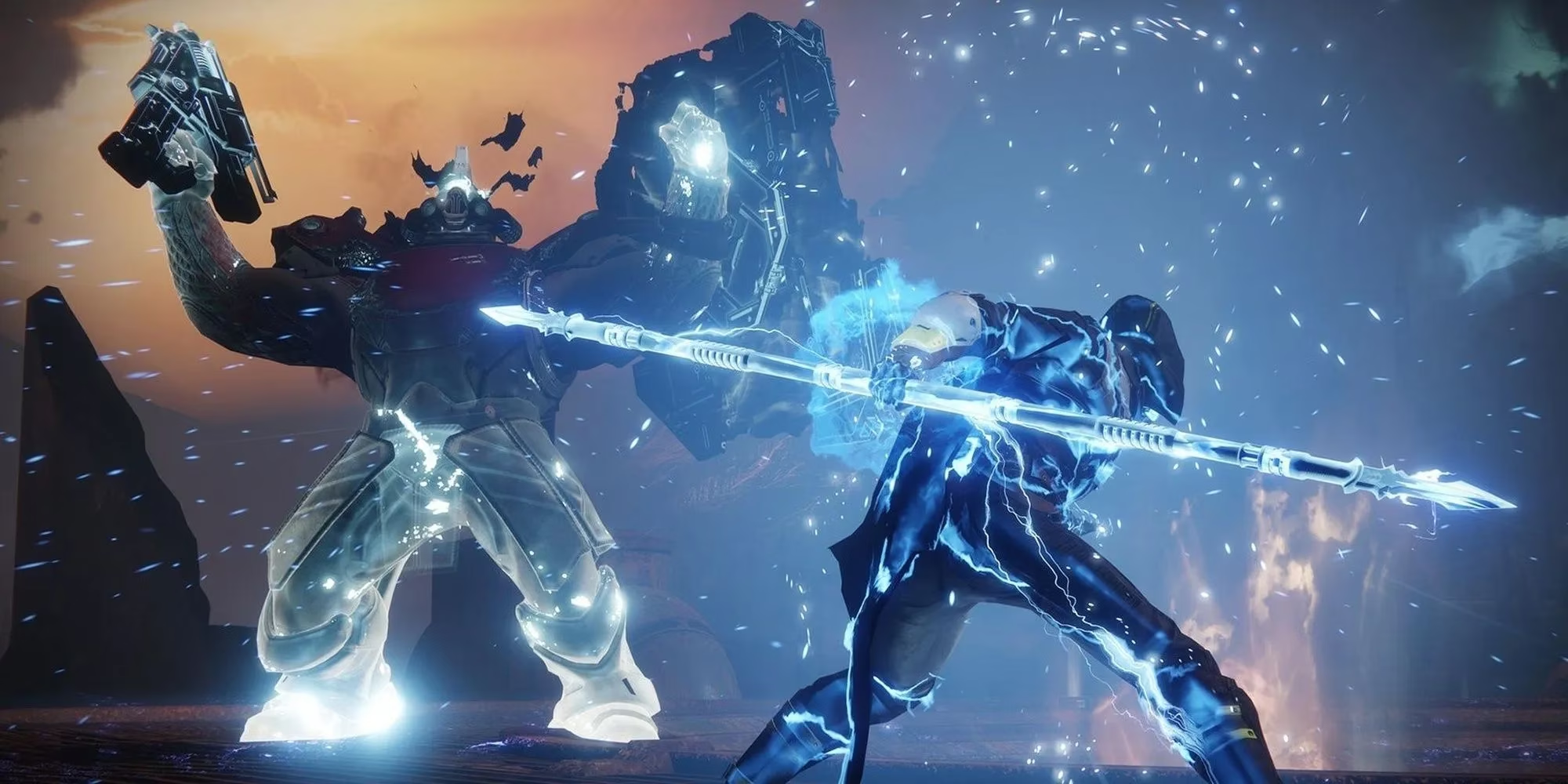
Abandoning Destiny 2 is not easy. I have a vault with over 400 items that will simply remain unused, a monument to a game I now have mixed feelings for. They will still be there if I ever decide to come back. But by then, there will surely be another sunsetting event that renders my armory sub-par, if not entirely useless. Isn't that the cruelest trick of the live-service model? It makes you feel like you own your progress, then reminds you that you are only renting it.
I do not begrudge anyone who still enjoys Destiny 2. Keep playing. Even if it eventually means spending thousands of hours in a single game to the exclusion of all others. But that is not what I want. Not anymore.
The 2026 Verdict
In 2026, live-service games are everywhere. They are bigger, louder, and more demanding than ever. The next time someone suggests trying a new one, I think I will pass. There are just too many games to spend your life in only one. Why give one universe everything when you can give many universes something? I have 2,850 hours of proof that the answer, for me, is simple: I would rather leave.
Industry context is informed by Entertainment Software Association (ESA), whose reporting and resources help frame why live-service design can feel like an “always-on” commitment—echoing this post’s point that Destiny 2’s endless pursuits (seasonal checklists, gear churn, and time-gated progression) can crowd out other games and make long-term engagement feel more like renting progress than owning it.