There's a peculiar magic in returning to a place you once knew, only to find it altered beyond recognition – not by a patch, but by the very narrative you've been playing. As a lifelong gamer, I've come to believe that static maps are like paintings in a gallery: beautiful to admire, but ultimately frozen in time. Truly memorable worlds, however, behave more like living organisms, growing scar tissue and new limbs in response to your actions. This organic transformation is what turns a digital playground into a home you're afraid to leave, because you never know what might change while you're away. Having crisscrossed countless virtual continents, I've collated the most staggering map metamorphoses that have ever jolted me out of my sofa with a mix of awe and terror.
The Ember Rain That Changed Everything
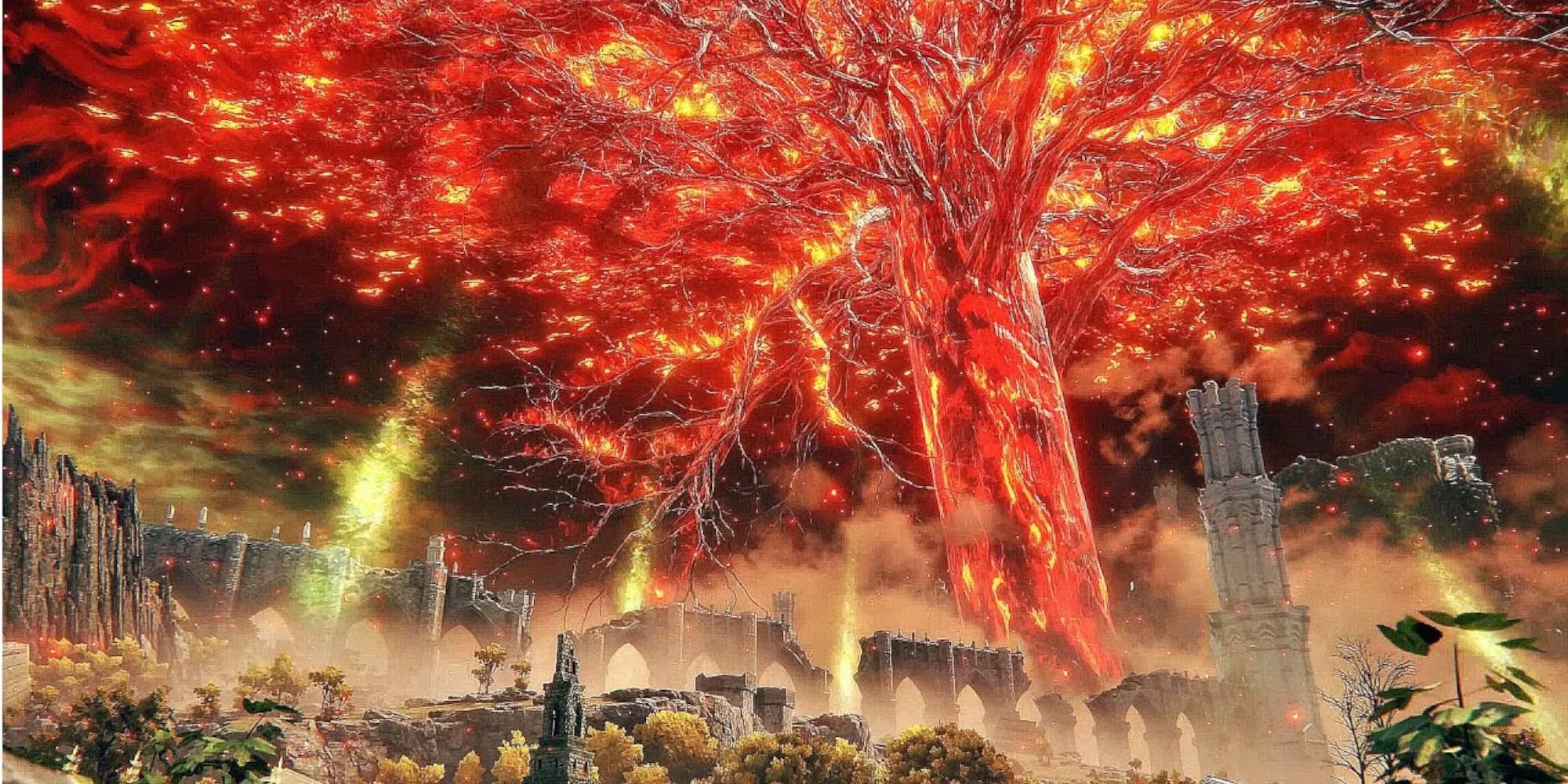
Back in 2022, Elden Ring taught the industry that a world could be both staggeringly vast and intimately reactive. Two events remain etched in my memory like a brand. First, after defeating Starscourge Radahn, the very sky opened up and a colossal crater tore through Limgrave. It wasn't just a cosmetic dent; the meteor impact unlocked Nokron, the Eternal City, essentially birthing an entire underground civilization from the corpse of a single boss. The second event was even more visceral: the burning of the Erdtree. I'll never forget riding through Liurnia as glowing embers fell like a constant, silent apology from the gods. The world didn't just change – it mourned, and every region wore that grief on its horizon. Even in 2026, those embers remain one of the most poignant uses of environmental storytelling.
Living Pathways in a Lonely World
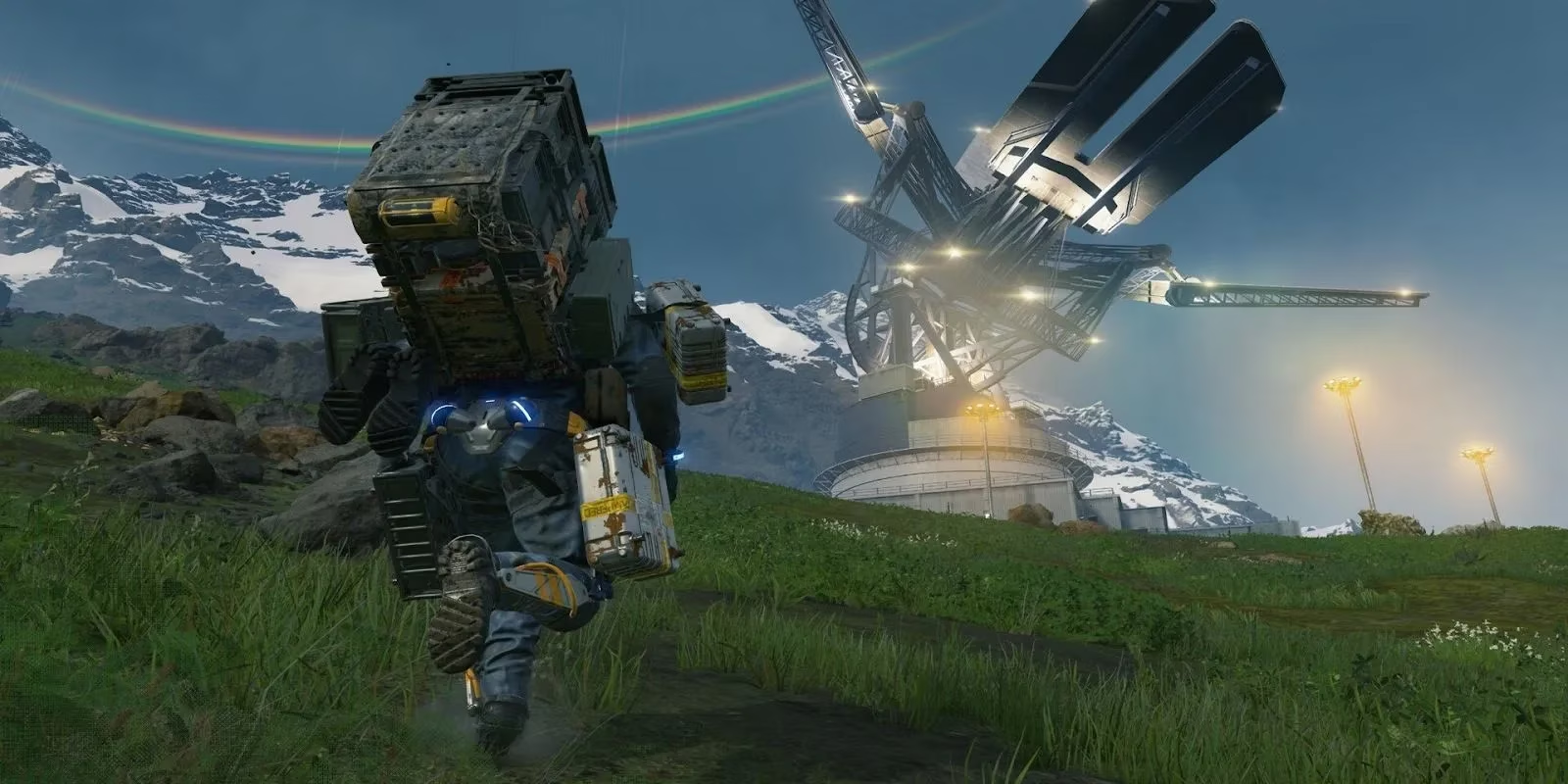
If Elden Ring's changes are divine decrees, then Death Stranding offers something far more democratic. Kojima's polarizing masterpiece introduced two types of map alteration that feel like a social experiment wrapped in a hiking simulator. On the personal level, if a BT eats Sam or any human, a voidout triggers a massive crater that scars the terrain permanently. It's as if the map itself has an immune system that overreacts, leaving a permanent pockmark to remind you of your panic. The real genius, however, lies in the collective dirt pathways. At launch, I remember thinking the barren grass was dull, but weeks later, I noticed faint trails snaking across the plains – tracks created by thousands of players taking the same optimal route. The terrain actually flattens with enough foot traffic. It's like watching desire paths form in a national park, a slow, beautiful erosion that whispers, "You are never truly alone." By 2026, this system has evolved further with new terrain types, but the original remains a benchmark.
A Seasonally Shifting Canvas
Long before open worlds became routine, Pokémon Black and White on the humble DS pulled off a trick that still feels underappreciated. The game's world shifts through a monthly seasonal cycle, and I don't mean just swapping textures. Winter freezes lakes into thick ice, allowing you to walk over previously impassable water and discover hidden groves. Autumn carpets routes in auburn leaves, while spring brings blooming flowers that alter available Pokémon spawns. This isn't a one-time narrative beat; it's a metronome. Playing in 2026, diving back into Unova feels like revisiting a childhood home where the furniture rearranges itself every thirty days – comforting yet perpetually surprising.
The City That Crumbles Twice
NieR: Automata remains a masterclass in how to weaponize architecture. The city ruins you explore early in the game are a melancholic shell, but functional. Then Engels – the colossal machine, not the philosopher – crashes into the district, flattening almost everything you recognized. The shock is akin to a museum suddenly dropping its ceiling on the exhibits. Afterwards, a massive crater opens leading to the Flooded City, fundamentally restructuring the entire route network. This isn't just a destroyed building; it's a door ripped into the earth. I recall standing at the precipice in 2017, and even replaying it now, the sense of violation feels fresh, coupled with the thrill of uncharted depths.
Darkness Eternal and Abyssal Pits
Capcom's cult classic Dragon's Dogma achieves something rarely attempted: it withholds the cataclysm until after most players think the game is over. Upon defeating the Dragon, the world plunges into an eternal dark period. The once bustling capital of Gran Soren collapses into ruin, half the city swallowed by a gaping abyss. This post-game world becomes a landscape of despair, populated by monstrously powerful enemies. It's as if the game knocks you down after the victory lap and growls, "The real exploration begins now." In a 2026 gaming landscape flooded with endless live-service updates, Dragon's Dogma's drastic, single-player twist remains a testament to sticking the landing with a sledgehammer.

Shared Battlefields, Divergent Fates
Fire Emblem: Three Houses reinterpreted map evolution through the lens of perspective. After the time skip, iconic battlefields like Gronder Field serve as shared stages for different routes, but their appearance and layout morph based on your allegiance. Align with Dimitri, and the field blazes with Kingdom banners and a reckless charge. Follow Edelgard, and that same field becomes a crimson tapestry of empire conquest. The ground you tread is the same, but the scuff marks are entirely different. It's a narrative kaleidoscope – each twist rearranges the same fragments into a new, horrifying shape, and replaying in 2026 for the tenth time still reveals subtle environmental details I missed before.
The Galaxy as a Living Ruleset
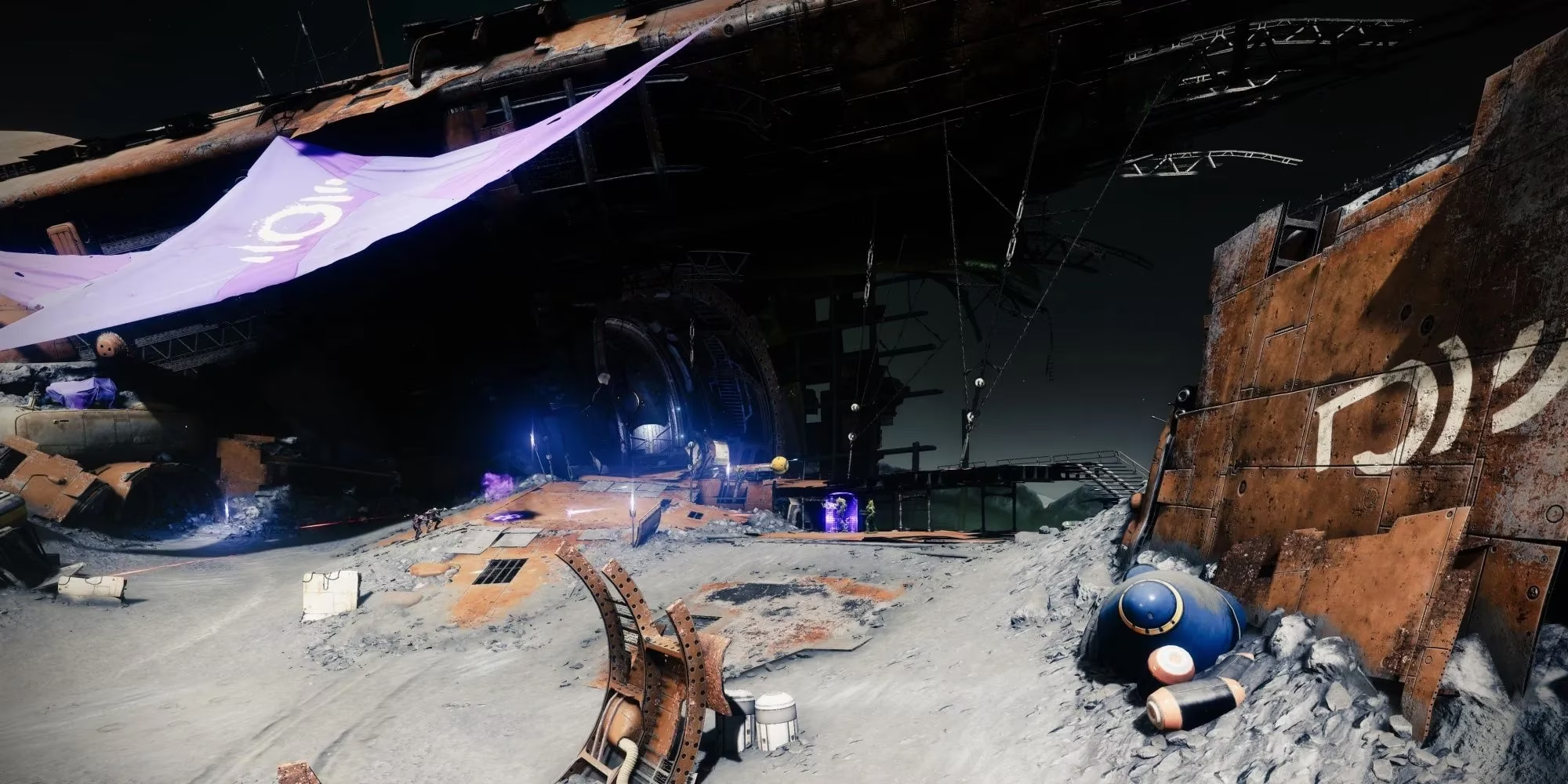
No discussion of evolving worlds can ignore Destiny 2. Bungie’s looter shooter treats its solar system like a living game board. I've seen planets get swallowed by Darkness, only to reappear years later with reworked geography. The Tower hub changes its occupancy and skybox with each season, a subtle reminder that even the safest sanctuary can pivot into a war room. It isn't just content removal; it's a calculated surgical operation. Witnessing Mercury vanish into the void – permanently altering the destinations tab – felt like having a limb amputated, a gambit no other MMO would dare. And in 2026, with the post-Final Shape saga unfolding, new areas continue to bloom and wither based on the community's collective actions, proving that the stars themselves shift under our boots.
The Beauty of Dynamic Scars
These examples share a common thread: they feel like the map engine itself has emotions. Whether it's a meteor, a season, a player's footprint, or a dragon's curse, the terrain remembers. In an era where photorealism often trumps reactivity, I find myself gravitating back to these worlds precisely because they are imperfect, prone to catastrophic remodeling like a sandcastle reclaiming itself under the tide. They remind us that exploration isn't just about what we see, but what we irrevocably change.