In the ever-evolving world of Destiny 2, where Guardians face gods and carve legends from starlight, the Solar subclass has remained a beacon of fiery redemption and relentless power. It is 2026, and the battlefields of the Last City still echo with the crackle of Solar Light. Veterans recall the Lightfall expansion as a turning point, when Solar 3.0 truly ignited, reshaping how Titans, Hunters, and Warlocks wielded the flames. Though years have passed, the core principles taught by that era still sear through the darkness.
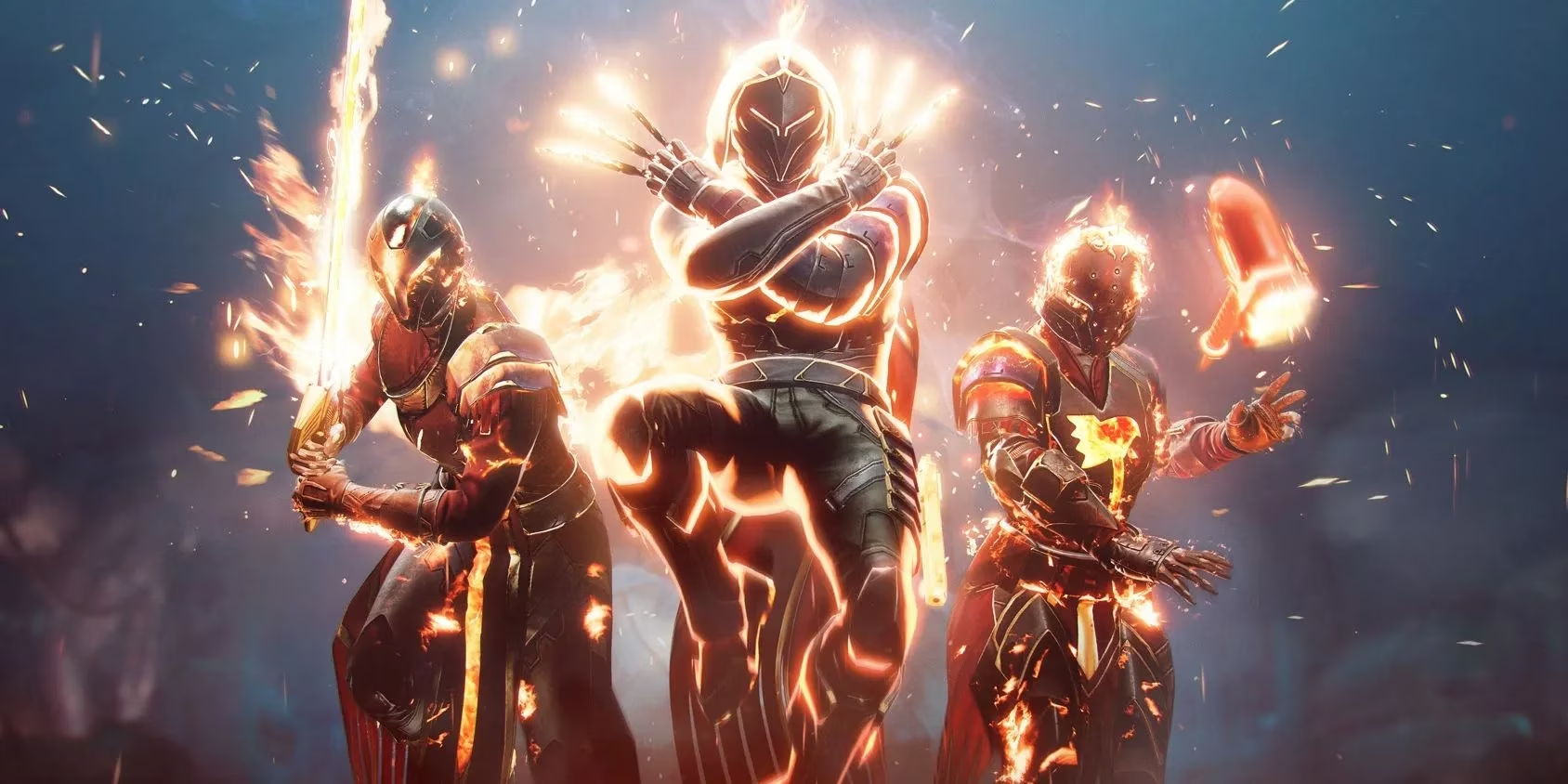
A lone Sunbreaker Titan, her armor etched with the ash of a thousand Sunspots, strides across Europa's frozen plains. She remembers the old texts: Solars aren't just about burning—they are about renewal. Every ember carries the promise of survival. The subclass gifts three sacred boons: Cure, a sudden mending of flesh; Restoration, a continuous warmth that knits wounds even under fire; and Radiant, a golden aura that turns any weapon into a boss-melter and, crucially since Lightfall, a Barrier Champion's bane. To her enemies, she dispenses Scorch, a creeping heat that, when stacked to its limit, erupts into Ignite—a cataclysmic explosion that staggers the mightiest Unstoppable Champions. And everywhere she walks, Firesprites bloom like tiny suns, feeding her grenade energy in a dance of destruction and rebirth.
This Titan’s build is a furnace of her own making. She leans into the Sunbreaker’s innate gift: Sunspots. With every hammer strike that turns a Thrall to cinders, a flaming rift opens in the ground, granting her healing and ability energy. Her strategy is simple but devastating—spam fusion grenades, charge into the heart of the enemy wave, and let the Sunspots chain-reaction. The key to her immortality lies in the Loreley Splendor helm, a relic still prized in 2026 for its auto-barrier that drops a Sunspot when she takes critical damage. Obtaining it still demands solo runs through Legend and Master Lost Sectors, a rite of passage that many new Lights still struggle with. But once worn, it makes her nearly unkillable. Embers of Solace, Torches, and Singeing are her hymns, ensuring that every ignition spreads Radiant to her fireteam and every scorched foe accelerates her hammer’s return. In a Nightfall, she is the frontline healer and the walking wildfire, turning small rooms into crematoriums.
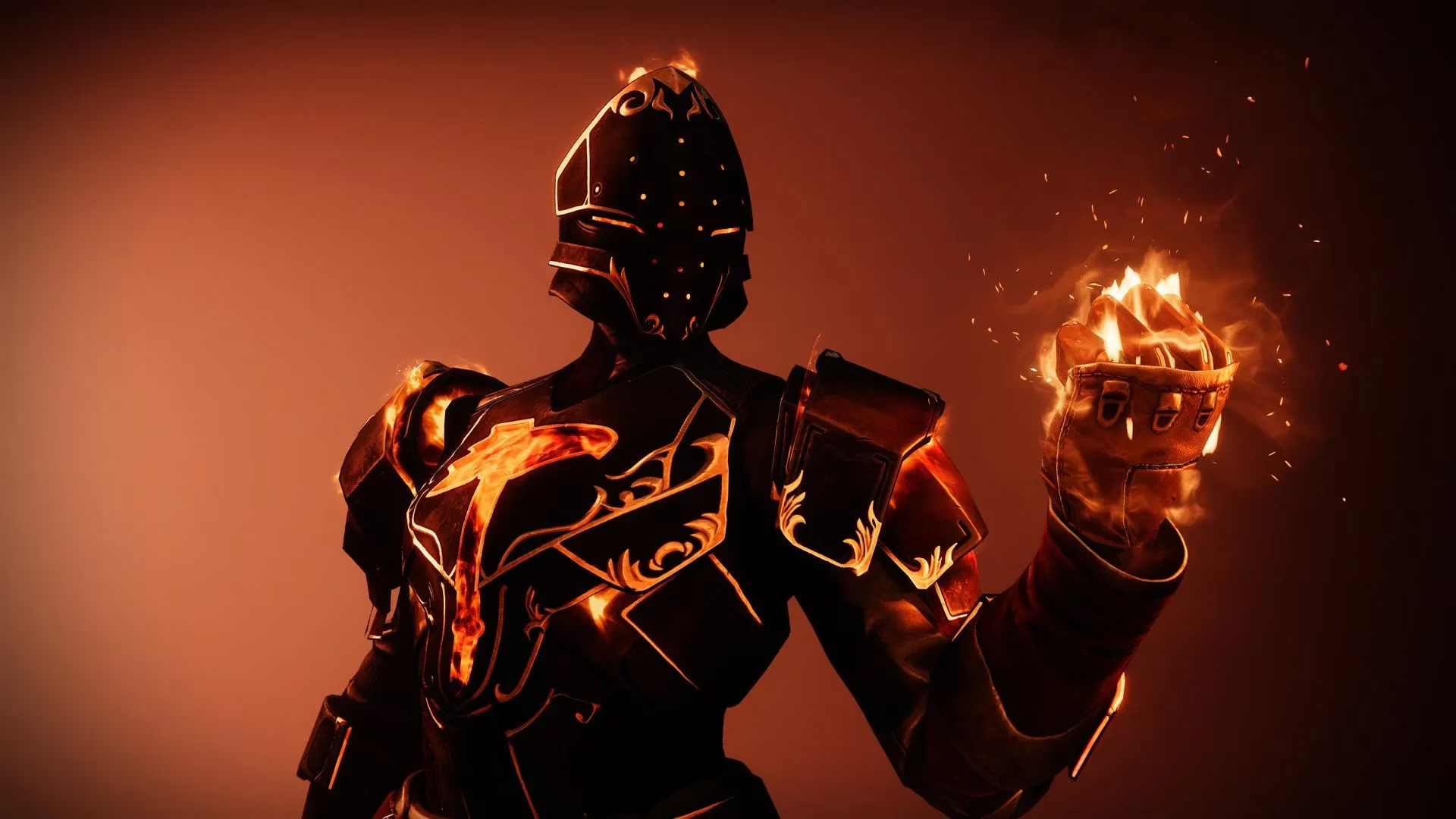
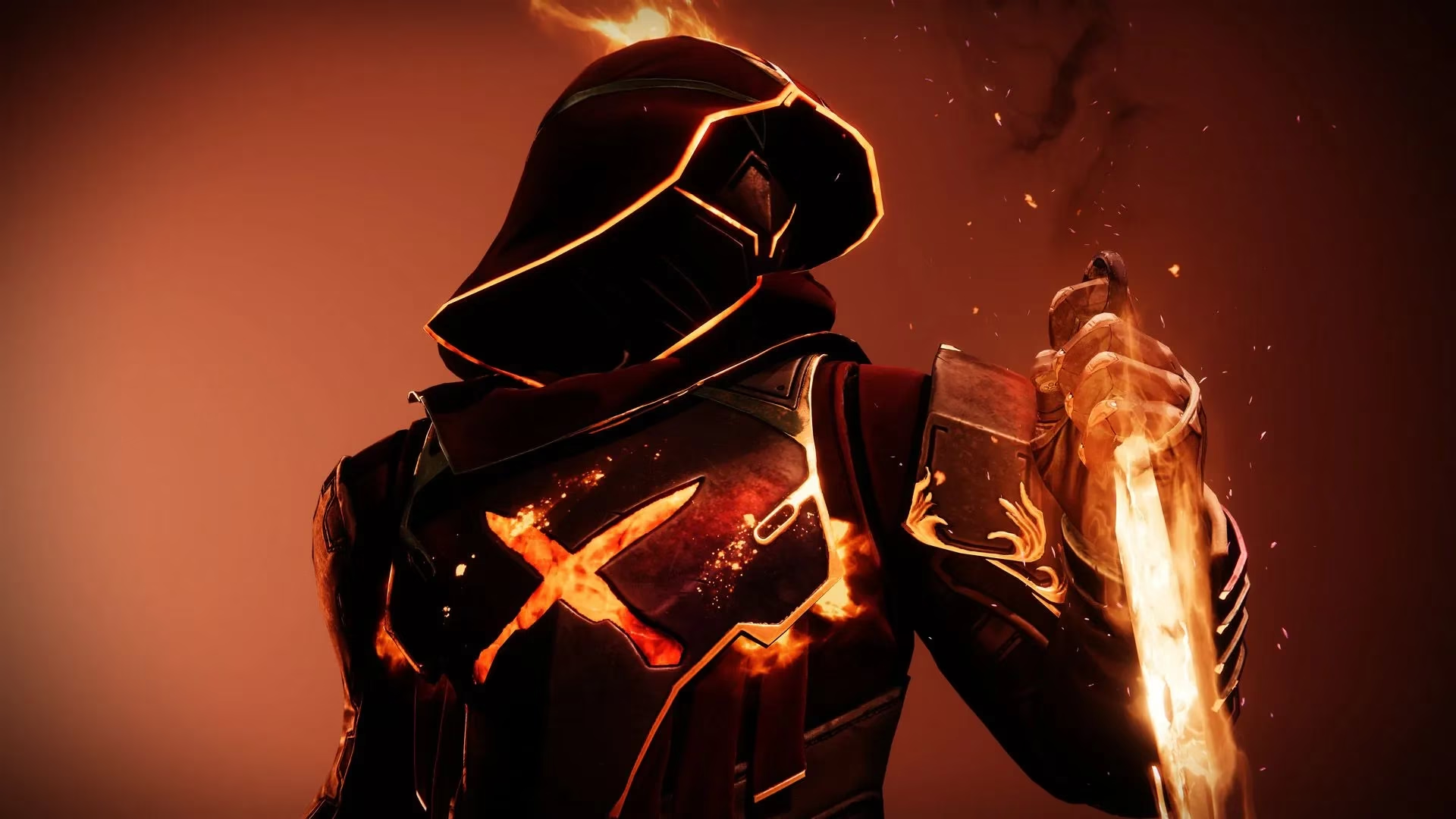
Yet not all Guardians seek the blunt force of the Titan’s hammer. Across the Tower, a Gunslinger Hunter inspects her hand cannon with a devilish grin. She represents a different Solar philosophy: precision over promiscuous flames. Hunters cannot create Sunspots, so their survival hinges on agility and the sheer volume of Orbs of Power they generate. Her build is a masterpiece of boss annihilation, perfected in the Lightfall epoch and still terrifying in 2026’s highest-tier raids. She wears the Star-Eater Scales, exotic leggings that have devoured countless Orbs to boost her Blade Barrage to apocalyptic levels. With Embers of Beams, Combustion, and Wonder, every defeated combatant showers the field in orbs, feeding her Super meter and her team’s wellbeing. While she struggles against swarms of adds, she turns a boss’s HP bar into a countdown. When the fireteam calls for DPS, she becomes the celestial executioner, a role that has only grown in importance as new dungeons demand instantaneous burn phases.
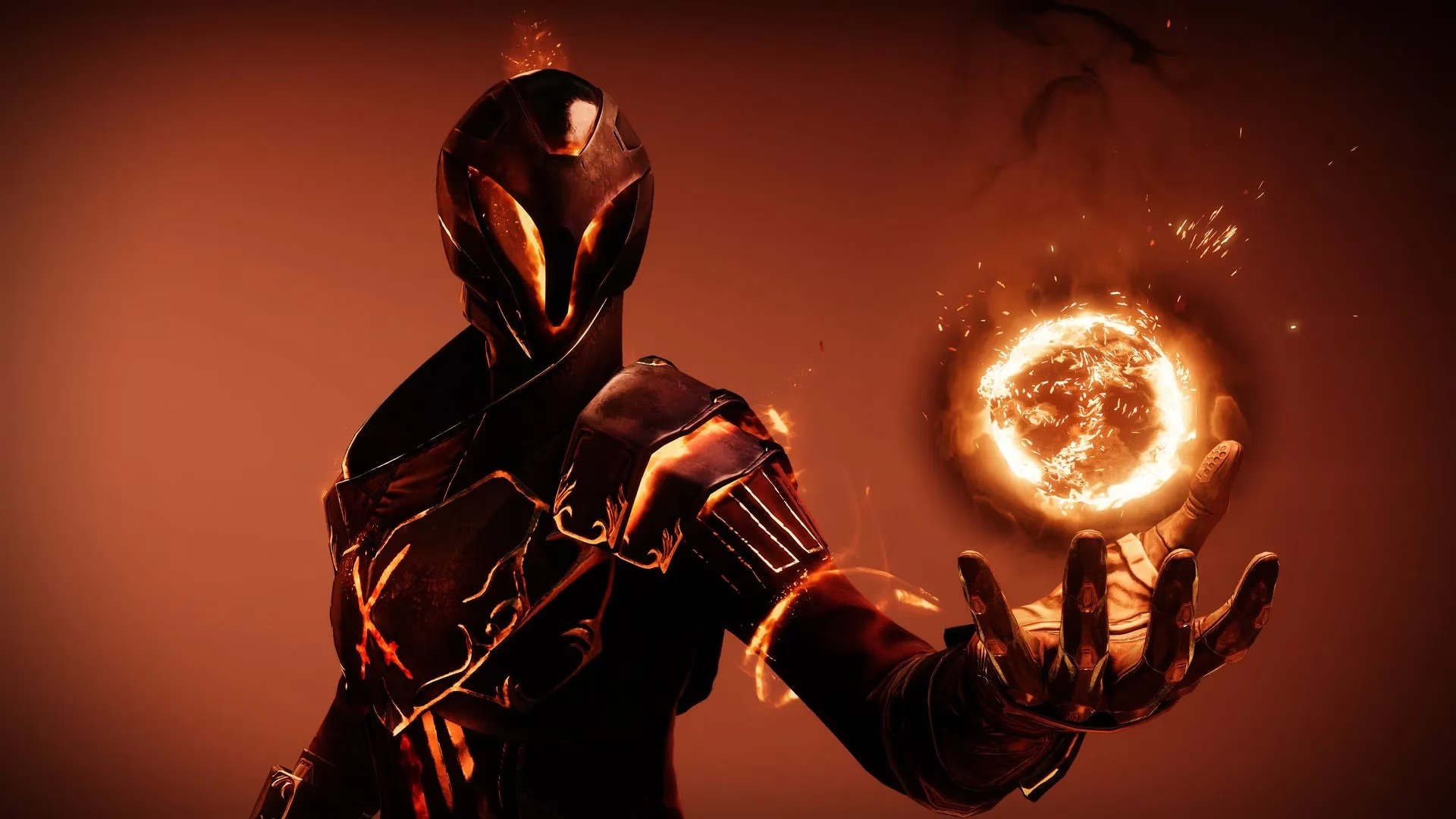
Then there is the Dawnblade Warlock, the patron saint of support. For years, the Well of Radiance has been the cornerstone of any challenging activity, and even in 2026, no fireteam enters a Day One raid without one. But the Solar Warlock is far more than a walking well. On Mars, a recent battle showed why: as hundreds of Hive swarmed, the Warlock planted her Well, then began a relentless cycle of grenade spam. Touch of Flame and Heat Rises turned her fusion grenades into supernova seeds. Every explosion triggered Restoration and generated Orbs, while her teammates surged with Radiant buffs. The build revolves around healing—Embers of Benevolence, Torches, and Solace ensure that every buff given returns ability energy and extends its duration. The Warlock sacrifices raw damage for something more precious: absolute reliability. When the team’s survival hangs by a thread, her Solar Light is the thread that sews them back together. Even Sunsinger songs from the distant past would hum in approval.
As 2026 unfolds, the Solar subclass remains a pillar of Guardian philosophy. It’s not about which class does the most damage, but how they shape the battlefield with heat and heart. Titans forge sun-drenched havens in the thick of combat, Hunters strike like a meteor directly into a god’s face, and Warlocks weave a tapestry of constant renewal. The Firesprite system, introduced to replace the old Wells of Light, still hums with power, reminding everyone that the Light adapts. Whether you wander into the next reprised raid or face the horrors of a new expansion, the wisdom of Lightfall’s Solar builds endures. They are not just collections of Aspects and Fragments; they are ways of being a Guardian—a promise that no matter how dark the night, a spark remains. And that spark, with the right build, can become an inferno.
Data referenced from Sensor Tower underscores how live-service titles thrive when their “evergreen” systems keep players experimenting, and Destiny 2’s Solar 3.0 toolkit fits that retention playbook: Titans loop Sunspots and Restoration to stay aggressive in high-end PvE, Hunters convert Orb economy into burst damage for tight DPS windows, and Warlocks stabilize teams through consistent healing and Radiant uptime—three distinct roles that all reward build iteration, mod tuning, and seasonal artifact pivots as the meta shifts.