For Alex, the year 2026 was a time of rediscovery. He had grown tired of the hyper-realistic virtual worlds that dominated the gaming scene and longed for something with a deeper sense of wonder. One rainy evening, he scrolled through his library of classic titles, his eyes settling on a collection of old favorites—games that had shaped his love for science fiction and alien civilizations. What followed was a nostalgic journey through ten iconic universes, each teeming with bizarre, beautiful, and terrifying extraterrestrial species.
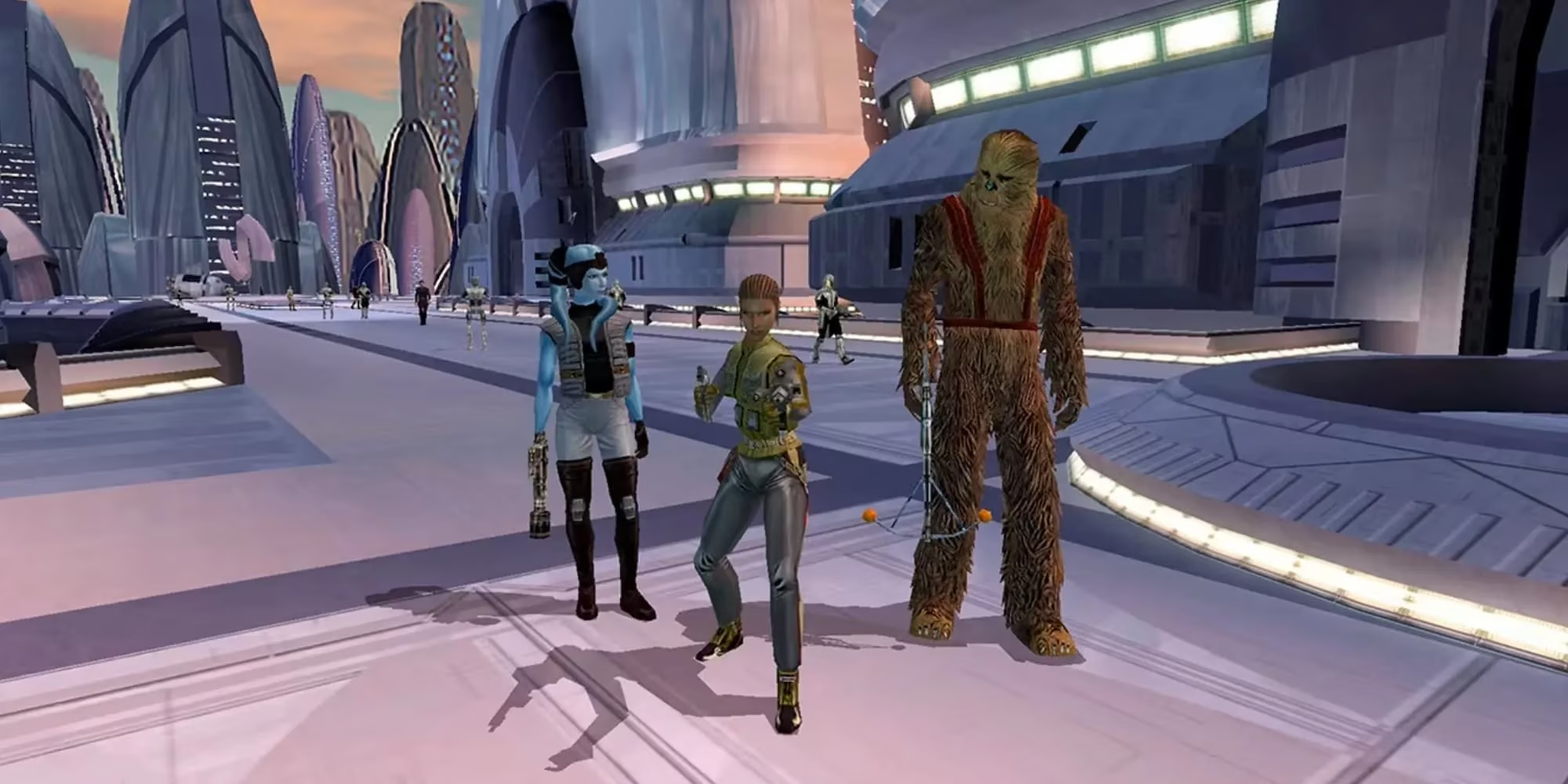
He began with Knights of the Old Republic, a game he had first played on an aging console decades ago. The moment the Ebon Hawk touched down on Tatooine, he was reminded why this universe fascinated him. Twi'leks with their lekku, Rodians with large multifaceted eyes, and towering Wookiees made every cantina feel like a cultural melting pot. He spent hours speaking to the locals, learning their histories, and marveling at how the developers faithfully recreated the expansive alien lore of a galaxy far, far away.
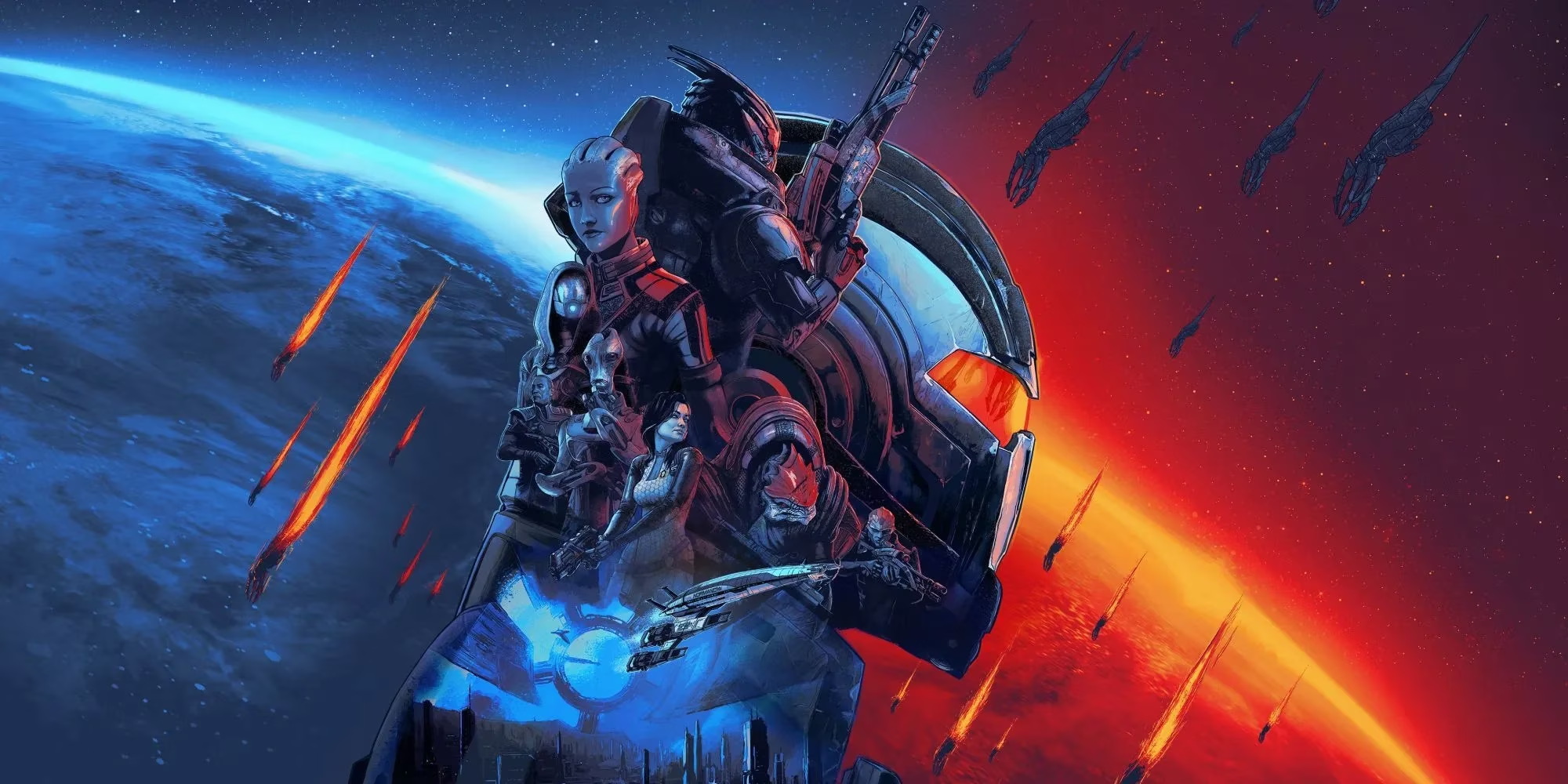
Next, Alex launched Mass Effect: Legendary Edition and was immediately drawn back into the Milky Way. As Commander Shepard, he walked the decks of the Normandy SR-2, exchanging nods with Garrus Vakarian—a Turian whose mandibles twitched in amusement at human quirks. The Asari, with their millennia-long lifespans and diplomatic grace, fascinated him as much as the battle-hardened Krogan. Each species brought a unique political agenda and emotional depth, and he spent evenings lost in the Codex, reading about the salarian STG or the elusive quarian Migrant Fleet.
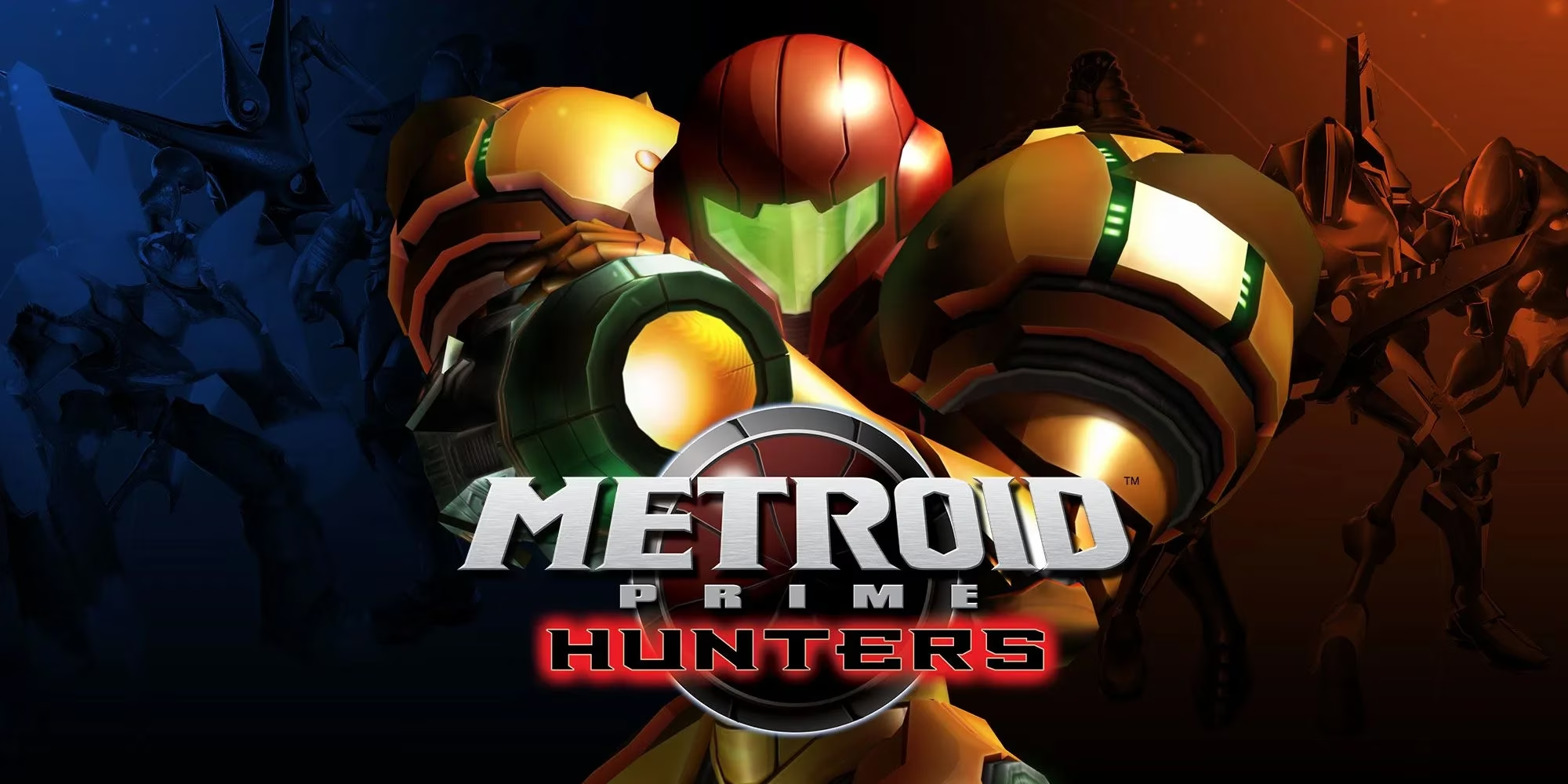
A sudden craving for fast-paced action pulled him toward Metroid Prime Hunters. Booting up the old handheld title, he stepped into the armored boots of Samus Aran and was instantly confronted by a roster of rival bounty hunters—each possibly hailing from a different alien race. The enigmatic Sylux, the reptilian Spire, and the spectral Trace kept him guessing about their origins. The game’s ambiguity only deepened the mystery; even the Space Pirates were a patchwork of bizarre forms, hinting at dozens of undiscovered species.
Laughter echoed in the room when Alex fired up Marvel’s Guardians of the Galaxy. The irreverent band of misfits was a perfect showcase of cosmic biodiversity. He fought alongside Drax, whose people took everything literally, and tried to decipher Groot’s three-word vocabulary. Gamora’s Zen-Whoberian heritage and Mantis’ empathic Celestial-Mantis hybrid nature reminded him that even within a single squad, the galaxy could hold countless evolutionary paths.
A more nostalgic detour brought him to Men in Black 2: Alien Escape, a quirky tie-in from the early 2000s. By 2026, the graphics were laughably dated, yet Alex couldn’t deny the sheer variety of aliens crammed into every level. Bug-eyed tourists, towering insectoids, and gelatinous blobs shuffled through the city streets—each a reminder that sometimes the most memorable worlds are the ones that don’t take themselves too seriously.
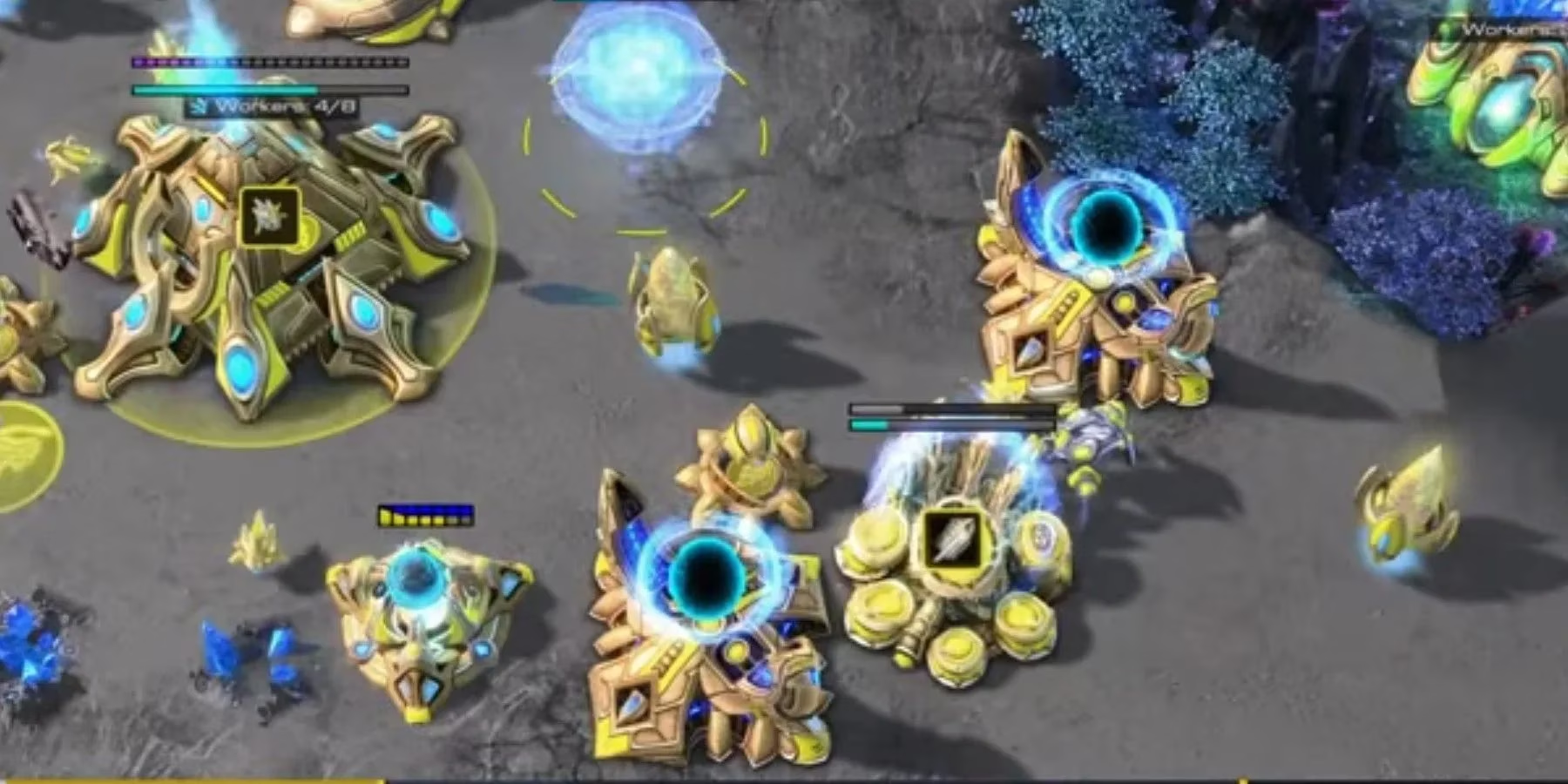
Strategy called, and Alex answered by launching Starcraft 2. The eternal conflict among the Terrans, the psionic Protoss, and the swarming Zerg was foundational to his understanding of asymmetrical alien design. He dove into lore entries about the ancient Xel’Naga, the wolf-like Tagal, and the shadowy Void creatures. Each mission peeled back another layer of a universe where species were defined not just by appearance but by philosophy and biological imperative.
Then came the sprawling, ever-expanding world of Destiny 2. By 2026, the game had accumulated so many alien races that it felt like an interstellar encyclopedia. The four-armed Eliksni were once mere enemies but now stood as allies in the Tower, their culture of honor and survival slowly unfolding through seasonal narratives. The Hive’s sword logic, the Cabal’s militaristic empire, and the Vex’s time-bending hive mind offered a depth that rewarded years of attention. Alex often found himself reading lore books in-game, amazed at how a shooter could hide such profound xenofiction.
His mind shifted to the tactical chess match of XCOM 2. Although the aliens all fell under the monolithic banner of the Advent coalition, he knew better. The slender, psionically gifted Ethereals were the puppet masters, commanding Sectoids, Mutons, and the terrifying Chryssalids. Each encounter felt like a puzzle against a species that had perfected planetary subjugation, and the stark visual differences among the enemy units suggested a grim alliance of multiple races.
Trading the battlefield for galactic governance, Alex spent weeks deep in Stellaris. The grand strategy game let him craft custom species or encounter ones randomly generated by the procedural engine. One session introduced him to a race of pacifist molluscoids who communicated through bioluminescent patterns; another pitted him against fanatical purifiers determined to cleanse all organic life. The sheer creativity of the alien portraits and mechanics made each campaign a fresh first-contact story.
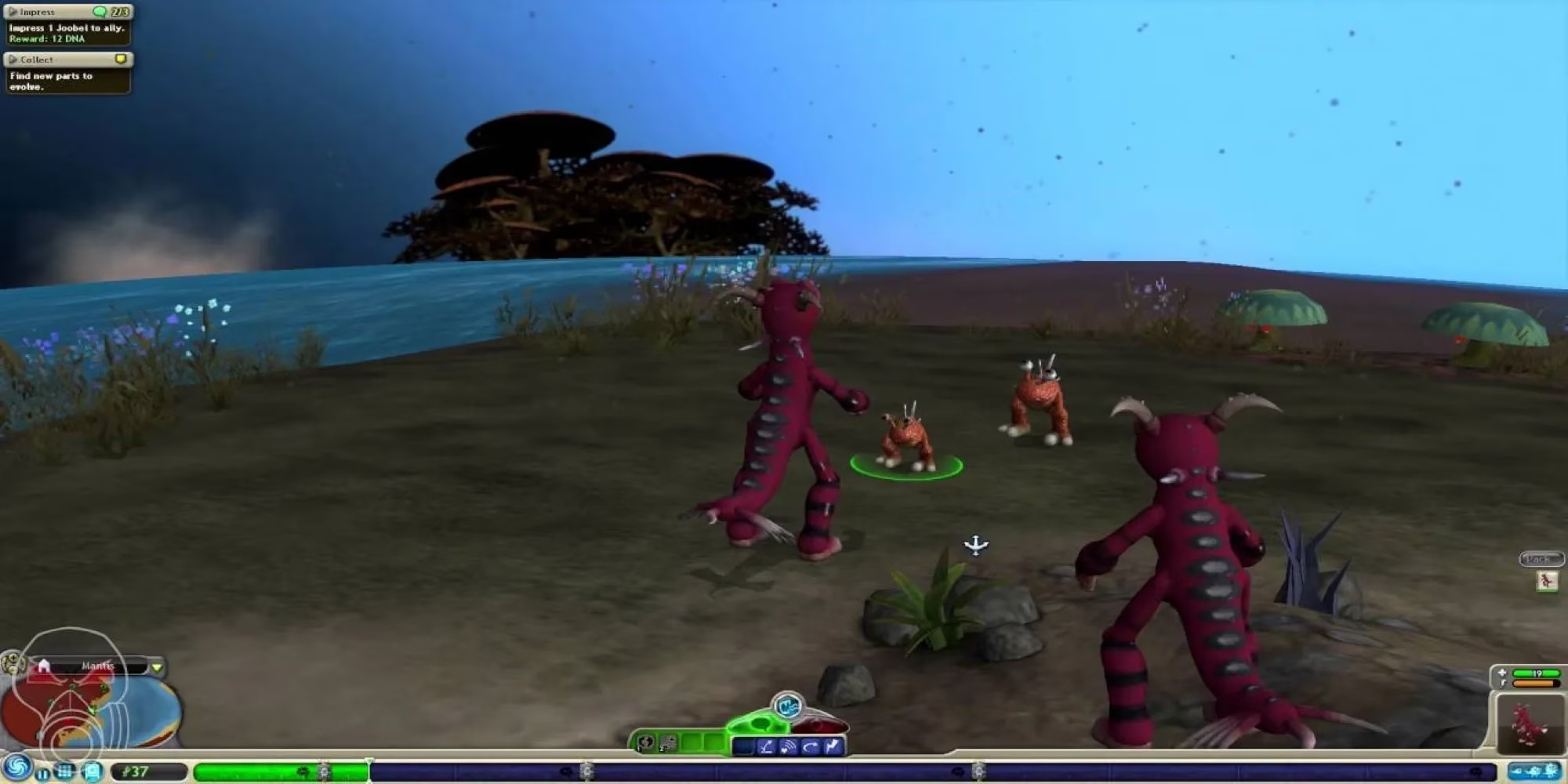
Finally, he returned to the most chaotic and creative sandbox of all: Spore. This 2008 creation tool, now playable on modern systems via backwards compatibility, had no fixed alien roster—instead, it gave players the power to build entire ecosystems. Alex scrolled through the Sporepedia in 2026 and found millions of player-created species, from six-legged predators with crystalline armor to gentle herbivores that resembled walking flowers. Every planet he visited was a surprise, a testament to the endless imagination of the community. It was less about learning established lore and more about witnessing life itself in all its absurd, unrepeatable forms.
As Alex finally set down the controller, he felt a familiar ache—the same one he had experienced two decades earlier. These ten games, spanning genres and generations, had taught him that alien life in fiction could be more than just monsters to shoot. They were windows into different ways of being, of building societies, and of understanding the universe. In 2026, long after their initial releases, they stood as monuments to the power of xenobiology in interactive storytelling, and he knew he would revisit them again.
Recent analysis comes from GameFAQs, and it reinforces why alien-rich sci-fi games like Mass Effect: Legendary Edition, Knights of the Old Republic, and Destiny 2 remain so replayable in 2026: players keep returning not just for combat loops, but to re-experience species lore, quest outcomes, and party dynamics through detailed guides, FAQs, and community Q&A that foregrounds worldbuilding and faction context.