The cold, whispering winds of Sanctuary carry a new, formidable echo—the distant, rhythmic clash of steel against demonic hide, now harmonized with the urgent, shared breaths of fellow adventurers. As I stand before the obsidian spires of the Dark Citadel, a structure born from the malevolent heart of the 'Vessel of Hatred' expansion, I feel the very soul of Diablo 4 shifting beneath my feet. This is no longer merely my solitary crusade against the Burning Hells; it has evolved into a shared covenant, a testament to Blizzard's enduring vow to weave new, complex threads into the game's tapestry for years to come. The expansion itself was a balm, addressing old wounds with gifts of newfound power—fresh active skills that sing through my fingertips and passive talents that hum with latent potential, granting my class, and all others, a symphony of build variety previously unimagined. Yet, the Dark Citadel stands apart, not as a gift, but as a gauntlet thrown, irrevocably altering the multiplayer essence of this action RPG.
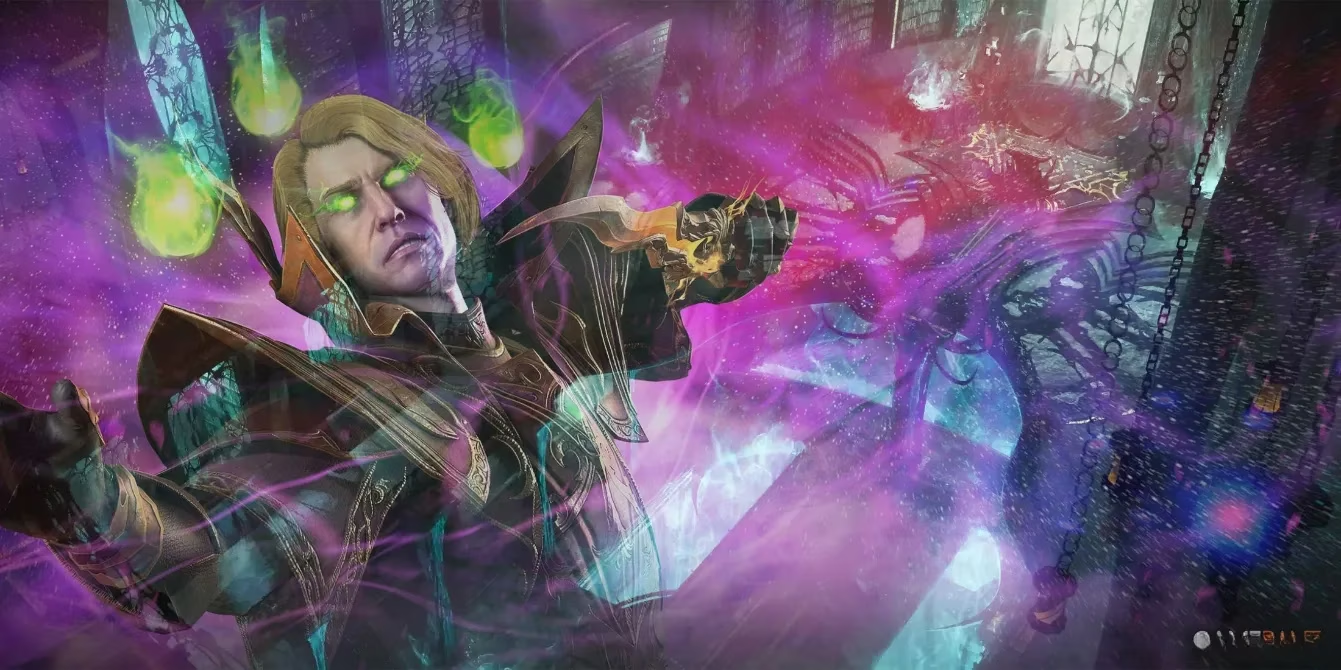
🏰 The Echoing Halls of Communal Trial
The revelation of the Citadel's design was met with a tempest of emotion within our community. For a game whose core has always celebrated the empowered, solitary wanderer, the Citadel's fundamental decree was a seismic shock: you cannot walk this path alone. Its very architecture rebels against solitude. Massive, rune-etched doors stand immovable without a second set of hands upon them; ancient puzzles, whispering secrets of light and shadow, demand a partner's perspective to solve. This is the lexicon of the MMO raid, a language familiar to veterans of World of Warcraft or Destiny 2, but one that felt foreign, even invasive, here in the gothic halls of Sanctuary. The necessity for communication—calling out mechanics, coordinating movements—replaces the meditative, internal rhythm of solo play with a frantic, external dance. I recall the controversy in Destiny 2 over exotic treasures locked behind two-player trials, and now, I live a parallel reality. The criticism is understandable, a lament for lost autonomy. Yet, to dismiss the Citadel for this alone is to ignore the profound, terrifying beauty of the challenge it presents.
⚔️ The Bitter Nectar of Exclusive Reward
The Citadel, like all great trials, dangles forbidden fruit. Its rewards are gilded with exclusivity, sparking both desire and discord:
| Reward | Nature | Community Sentiment |
|---|---|---|
| Weekly Cache | Powerful gear locked behind weekly completion. | 🔄 Expected, but reinforces FOMO (Fear Of Missing Out). |
| Exclusive Legendaries | Unique armor and weapons with Citadel-only powers. | ⚔️ Highly coveted, yet contentious for their gated nature. |
| Scroll of Restoration | A powerful, rare item allowing skill/paragon reset. | ❓ Coveted but problematic; can disrupt build economy. |
This structure is a double-edged sword. The thrill of securing a piece of gear that marks you as a Citadel conqueror is immense. Yet, it creates a palpable divide, a new stratum in Sanctuary's hierarchy between those who brave the communal depths and those who tread the solo path. The new party finder in Season 6 is a blessed tool, a spectral tavern notice board that connects lone souls. But finding a group is one thing; finding synergy is another. A mismatched band, where one soul's build is a masterpiece and another's a haphazard sketch, can turn the strategic ballet of the Citadel into a frustrating, chaotic brawl, ruining the experience for all.
🧩 The Unseen Reward: A Forged Communion
Beyond the shimmer of loot, the Dark Citadel offers a richer, more intangible reward. It is, without doubt, one of the most masterfully crafted endgame experiences in Diablo 4's history. It demands more than brute force; it requires:
-
Strategic Alchemy: You must think several steps ahead, understanding how enemy factions interact and how the environment itself can be a weapon or a trap.
-
Puzzle-Solving Wit: The silence between combat is filled with intellectual trials, where quick thinking and partner communication are your greatest spells.
-
Build Mastery: You cannot be carried. Your build must be a refined instrument, and you must know its every note and discord. This necessity for personal accountability, while daunting, forges a profound sense of accomplishment.
The activity strips away the possibility of a silent carry. You must engage, learn, and contribute. In this forced participation, I found an unexpected camaraderie. The shared struggle against impossible odds, the collective shout of triumph after solving a complex puzzle, the silent understanding when a plan clicks—these moments weave a bond stronger than any clan tag. The Citadel rewards you not just with a new helmet, but with a shared story.
🔮 Reflections from the Summit (2026)
Now, looking from the vantage point of 2026, the Dark Citadel stands as a bold, permanent landmark. It was Blizzard's definitive statement: the MMO-inspired soul of Diablo 4 is here to stay. It has not been without its thorns—the debate over solo accessibility rages on in new forms with each seasonal activity. Yet, its legacy is secure. It challenged the community's self-perception, pushed build-crafting to new heights of cooperative necessity, and added a layer of strategic depth that the game sorely needed.
For me, the pilgrim who once sought only solitary glory, the Dark Citadel transformed my journey. Sanctuary no longer feels like a lonely, haunted world, but a living realm where other heroes' lanterns pierce the same gloom. The expansion's promise of continual evolution was made manifest not just in new skill trees, but in this fundamental shift from a solo symphony to a sometimes dissonant, often magnificent, communal orchestra. The Vessel of Hatred may have carried malice, but within the Dark Citadel, it also forged an unexpected, hard-won fellowship in the dark.