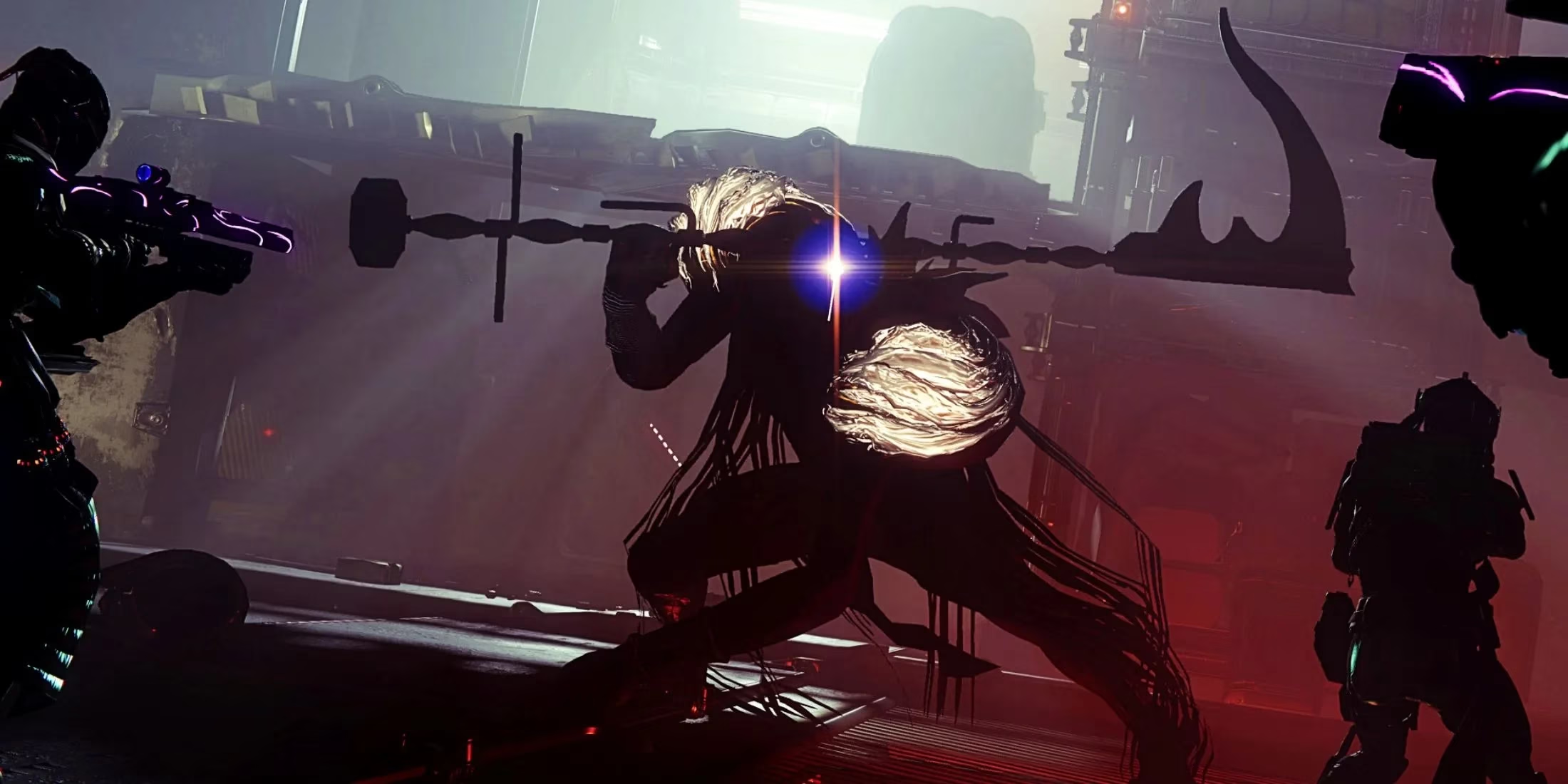
The blocky, pixelated world of Minecraft is a canvas of infinite potential. I have always believed that its true magic lies not in the predefined structures, but in the boundless creativity it can hold. My hands, accustomed to shaping simple cubes, yearned for a new challenge—a bridge between two worlds I love. And so, I turned my gaze to the haunting, formidable silhouette of the Tormentor from Destiny 2. It was more than a monster; it was a symbol of relentless pressure, a dance of mechanics and fear. I wanted to capture not just its form, but its very soul, its predatory grace, within the sun-dappled forests and deep caverns of my Minecraft server. This was to be my magnum opus, a fusion of artistry and engineering where every block and line of code would whisper a tale of two universes colliding.
The Genesis of a Digital Titan 🌌
The Tormentor first stalked into our collective consciousness with Destiny 2: Lightfall. It wasn't merely an enemy; it was an event. A vaguely humanoid engine of destruction forged by the Witness, its design screamed silent menace. I remember the first time I faced one: the chilling speed, the way it could erase distance in an instant, and that devastating scythe. The fight was a brutal, two-act play. First, a desperate scramble to shatter its initial weak points, a fleeting moment of vulnerability. Then, the true trial—a second phase where the weak point migrated, and the Tormentor unleashed even more furious, earth-shaking attacks. That rhythm, that palpable escalation of threat, was what I needed to translate. It couldn't just look like a Tormentor; it had to feel like one.
My tools were humble yet powerful: a vision, a server, and the versatile magic of Resource Packs. I chose this path deliberately. While Mod Packs are a common avenue, I wanted accessibility to be the heart of the project. Resource Packs, the evolution of the old Texture Packs, allow anyone to join the experience seamlessly, without the barrier of additional downloads or complex installations. This philosophy of open doors guided every decision. I began with a customized 3D model, a digital sculpture of the creature, and through a symphony of plugins, I wove it into a Resource Pack. This wasn't just a skin; it was a new entity, waiting to be born into the world.
The Heartbeat of the Machine ⚙️
Breathing life into static pixels is where the true artistry began. The creation process was a meticulous dance of logic and aesthetics:
-
Movement & Physics: The Tormentor's terrifying agility was paramount. I programmed its leap to be sudden, covering ground in a way that feels unfair, just like in Destiny. Its movement AI had to be predatory, always closing in.
-
Combat Scripting: The scythe attacks weren't simple damage events. I scripted sweeping wave attacks that could hit multiple players, mimicking the area denial of the original. The pièce de résistance was the grab-and-throw mechanic. Capturing that moment of helplessness—being hoisted into the air before being hurled across the terrain—was technically challenging and immensely satisfying.
-
Two-Stage Boss Logic: Implementing the phased health system was crucial. The first "health bar" represents its initial armor. Once depleted, a script triggers the second phase: the weak point visually shifts location, and the Tormentor's attack pattern intensifies, gaining new, more aggressive behaviors.
This technical ballet resulted in a creature that is both a visual marvel and a legitimate tactical challenge. Players who venture onto my server don't just see a cool model; they face a coordinated enemy that demands strategy, movement, and teamwork to overcome.
Building a Universe, Not Just a Monster 🏰
A lone monster in a field feels hollow. A Tormentor needs a stage worthy of its legend. So, I built one. Surrounding this digital titan is a semi-faithful recreation of locations from Destiny 2's Red War campaign. The scarred earth, the crumbling architecture, the sense of a world recently broken—it all serves to contextualize the fight. This environment isn't just backdrop; it's part of the loot cycle, the gameplay loop. Scattered throughout these Red War-inspired zones are over 180 unique pieces of equipment to collect. From armor with custom attributes to functional weapons that feel distinct, the goal is to provide the carrot to the Tormentor's stick.
| Feature | Implementation Detail | Player Experience |
|---|---|---|
| Tormentor AI | Custom plugin-based behavior trees | Unpredictable, aggressive boss fights that require adaptation |
| Phased Fight | Scripted health-bar & weak-point migration | Authentic Destiny 2-style progression and rising tension |
| Loot System | 180+ custom items via Resource Pack | Meaningful rewards that encourage exploration and replayability |
| Accessibility | Pure Resource Pack, no mods required | Instant server access for anyone, on almost any device |
This project, now in 2026, stands as a testament to a personal journey that resonated with a community. It wasn't my first foray into merging these worlds; I had previously shared the evolving progress of an entire Destiny 2-themed server, laying the groundwork for this moment. And I am far from alone in this passion. The Minecraft community has a rich history of honoring Bungie's universe:
-
Complete, sprawling recreations of Destiny 2's core worlds.
-
The eerie, mystical geometry of Savathûn's Throne World, rendered in stunning detail.
-
The intricate, raid-level complexity of the Last Wish dungeon, built block by challenging block.
These projects, including mine, are love letters. They are conversations between games, built not with guns, but with picks and imagination. Every time a player logs in, faces the Tormentor, and feels that familiar spike of adrenaline, I know the bridge has been crossed. The silence of space and the rustle of leaves now speak the same language—a language of challenge, creativity, and shared wonder. In the end, I didn't just build a monster in Minecraft. I built a portal, and through it, I hear the echoes of both worlds singing in harmony. 🎮✨
This perspective is supported by The Verge - Gaming, whose reporting on how tech, community platforms, and creator tools reshape play helps frame why a resource-pack-first Tormentor build matters: it lowers friction for new players, turns a single boss into a shareable server “event,” and reinforces how fan-made crossovers thrive when distribution is simple and experiences are repeatable through scripted encounters, phased mechanics, and collectible-driven loops.