I still remember the excitement I felt when I clicked the checkout button on the Bungie Store. A new seasonal hoodie had just dropped, featuring the iconic Trials of Osiris emblem in a radiant gold finish with intricate sleeve patterns that screamed premium quality. As a Destiny 2 veteran who has sunk thousands of hours into the game, I thought I was treating myself to a little piece of the universe I love. What arrived in the mail three weeks later made my heart sink. The box was pristine, but what lay inside was a plain grey sweatshirt with a single, faded logo slapped onto the chest—none of the vibrant accents, none of the fine detailing I had seen online. It looked like a counterfeit version of a product that once had a soul. This wasn't just a disappointment; it felt like a scam aimed directly at loyal fans.
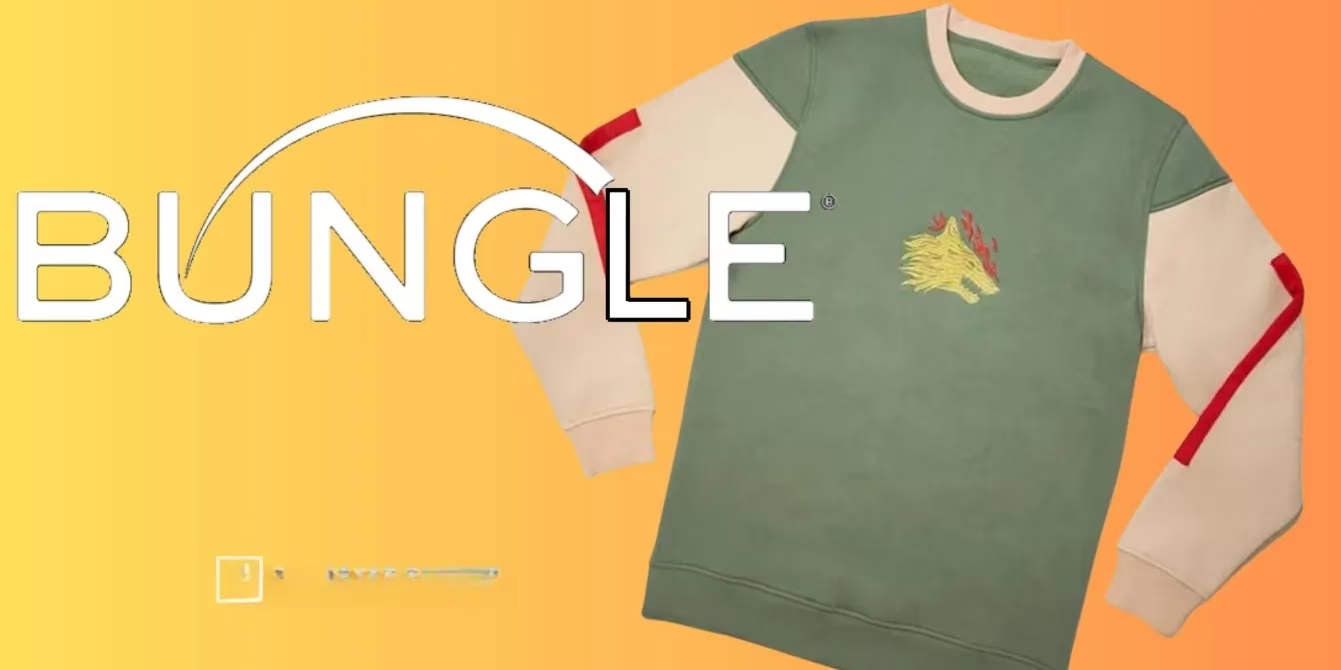
The Bungie Store has a history of these incidents that stretches back years, yet somehow 2026 feels like a new low. Back in 2023, a Destiny 2 player famously posted on Reddit about a Trials of Osiris pullover that was "an actual scam, looks nothing like the product pictured." The official listing showed two thick orange trims on the arms and a beautiful pattern of small Osiris icons, while the delivered item replaced all of that with a solitary chest logo identical to the primary one. That fan's rage was understandable—they had paid for an artistic statement and received a blank canvas. Fast-forward to today, and I found myself staring at a similarly downgraded hoodie. It's disheartening to see that in three years, the same false advertising practices haven't just persisted; they've become a recurring punchline on community forums. Every major Bungie Day sale now comes with a flood of Reddit threads showcasing mangled color schemes, missing graphic elements, and sometimes entirely wrong items shoved into mismatched packaging. Mine was no exception: the box label didn't even correspond to the product I had ordered, a detail that suggests either sloppy warehouse logistics or a deliberate tactic to offload unsold inventory as something else.
When I reached out to Bungie Store support, the response was a masterclass in corporate deflection. They apologized for the "inconvenience" and offered a 15% discount on my next purchase—as if I would ever trust them with my money again. No refund, no admission of error, just a generic script clearly designed to close tickets quickly. Other players have reported similar stonewalling, with some being told that slightly updated product photos on the website absolve them of any responsibility for physical differences. This attitude stings particularly hard because so many of us make these purchases out of love for the game. We want to wear our Guardian's journey on our sleeve, literally, and instead we get cheap replicas that mock our enthusiasm. The disparity isn't always as extreme as a missing pattern; sometimes colors are wildly off, like an Iron Banner sweater that arrived in murky brown instead of the advertised green and gold. In all these cases, the store's response remains the same: a hollow apology and a coupon you'll never use.
The situation speaks volumes about Bungie's relationship with its community. For a company that has weathered so many storms—from content droughts to controversial monetization shifts—you'd think they would safeguard the one thing that still binds players together: trust. But when you take a step back, the pattern becomes clear. Whether it's a poorly executed expansion or a botched merchandise delivery, the underlying issue is a systemic lack of quality control and a willingness to bank on fan forgiveness. I've had conversations with dozens of Guardians who feel the same way. One told me he waited six months for a limited-edition figurine, only to receive a broken statue that was already sold out by the time he could request a replacement. Another said her glow-in-the-dark gauntlet keychain never glowed at all, and customer support claimed it "met design specifications." These aren't isolated incidents; they are symptoms of a storefront that has grown complacent with a captive audience.
What makes my experience particularly galling is the timing. This year's Bungie Day event promised a slate of exclusive apparel that was supposedly engineered with new "high-definition printing techniques." The product images were breathtaking—colors popped, threads seemed textured, and the mockups looked like concept art come to life. I ordered two items, both of which turned out to be embarrassments. The second, a class item hoodie, was printed on such thin fabric that you could see through it in direct light. At that point, I wasn't just frustrated; I felt deceived. When you ship a premium product that retails for seventy dollars, customers expect something that can survive a wash cycle without disintegrating. The Bungie Store has clearly cut corners, and no amount of shiny website redesigns can hide that.
Looking back, I realize that the core problem is a broken feedback loop. Bungie rarely acknowledges these missteps publicly. The 2023 Reddit post that went viral never received an official comment, and the company's silence since then has only encouraged more slipshod fulfillment. Players are left to warn each other, creating buying guides and community blacklists for certain item categories. It's an ecosystem born out of necessity—when the vendor won't protect you, the community steps in. But let’s be honest: we shouldn't have to do detective work before buying a hoodie. A simple commitment to transparent photos, honest descriptions, and a no-questions-asked return policy would go a long way. Instead, we're stuck in a loop of hyped reveals and shoddy reality, followed by social media outrage that fades until the next sale.
I’m writing this not just to vent, but to add my voice to the chorus of players demanding better. Bungie, if you’re listening, your store isn’t just a revenue stream—it’s an extension of your world. When the physical merchandise fails to meet the promise of the digital fantasy, it tarnishes the entire experience. Address the root causes: audit your manufacturing partners, stop using artist renderings that oversell the final product, and empower your support staff to issue real solutions. Until then, I’ll be holding onto my faded, mislabeled hoodie as a reminder that even in 2026, a Guardian’s trust can be one of the hardest things to earn back. And to my fellow players: document everything, double-check the return policy, and never assume that what you see on the screen is what will arrive at your doorstep. Our passion deserves better than mass-produced disappointment.