I was twelve when I first held a Needler. I was twenty-eight when I finally stopped waiting for Halo to feel like Halo again. In 2022, I read the old argument like everyone else: Bungie had abandoned Halo, 343 Industries had inherited a cathedral and somehow kept losing the blueprints, and Destiny 2 was either a miracle or a treadmill depending on who you asked. Now, in 2026, the argument is over. The scoreboard is not even cruel anymore; it is just clear. Bungie's leap into the dark has become a long, messy, luminous orbit, while Halo Infinite has become a beautiful room with the lights slowly dimming.
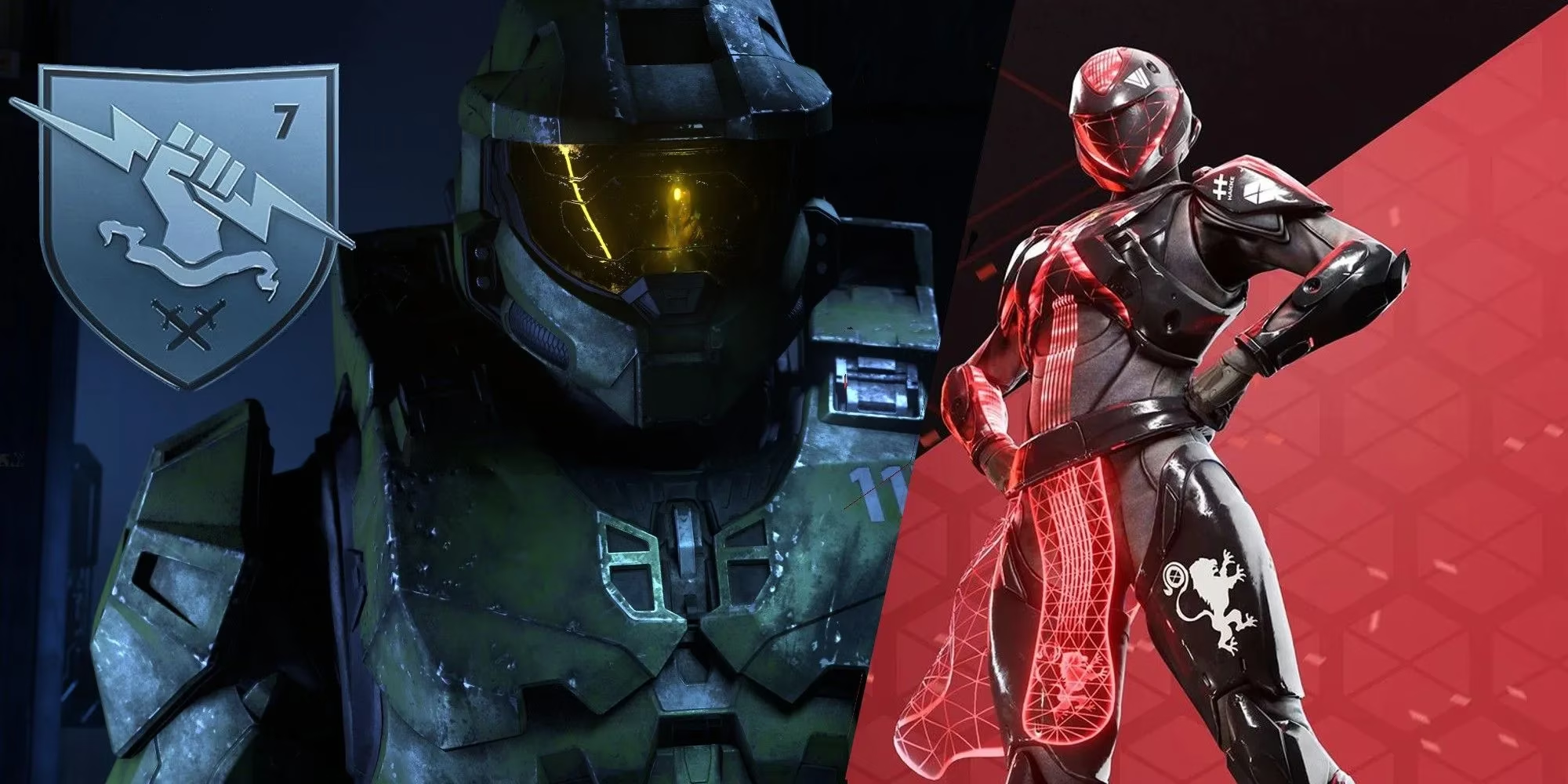
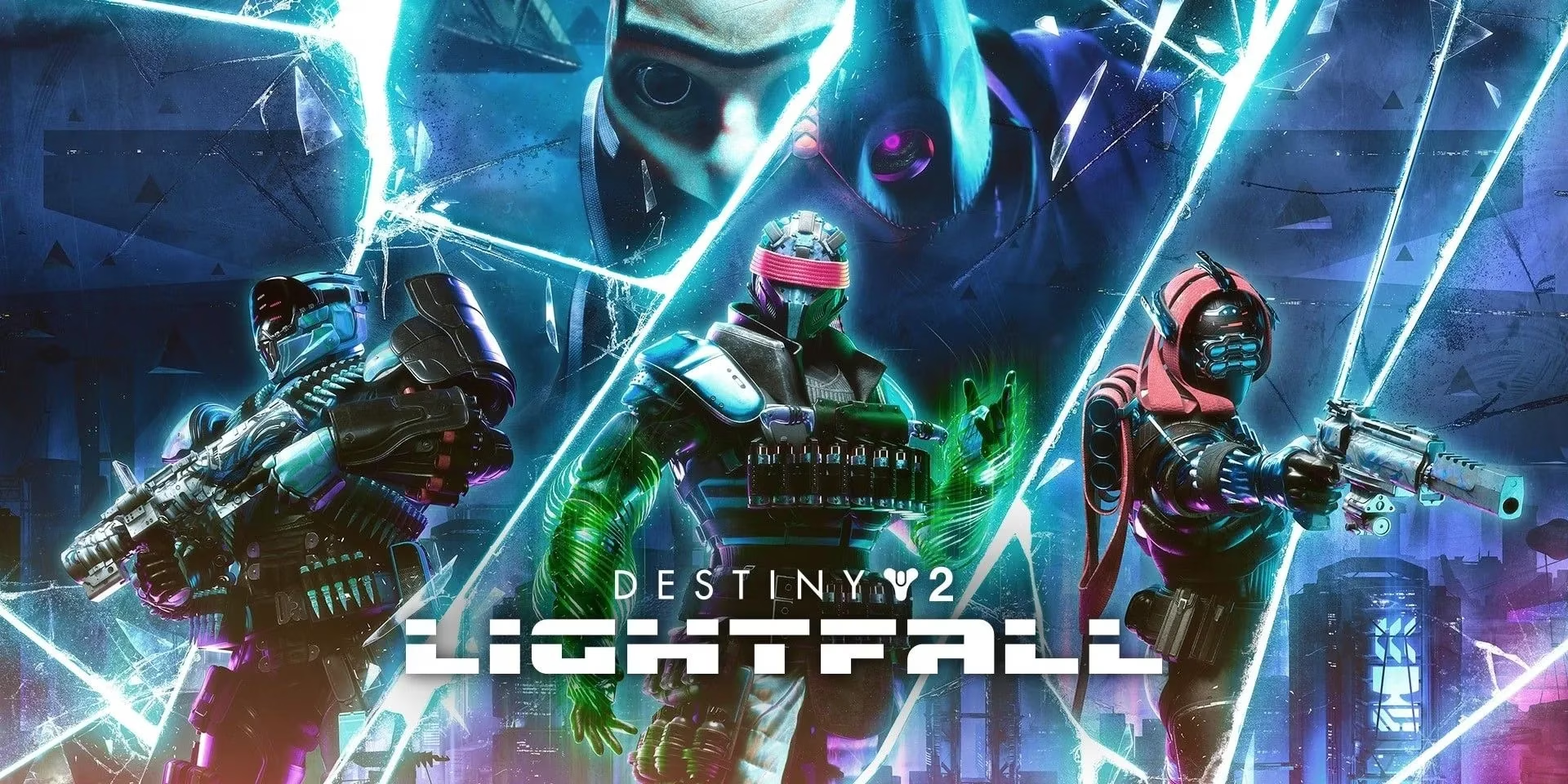
I remember the exact week in 2022 when the contrast stopped being funny. 343 announced that Halo Infinite's next season would not arrive until March 2023, leaving players with seven months of sparse updates in a live-service game. It also canceled local split-screen co-op and pushed Forge into November. Meanwhile, Bungie used Gamescom to reveal Lightfall, the next major Destiny 2 expansion. YouTuber SkillUp summed it up with a tweet I still think about: Destiny 2 would deliver two major expansions and four seasons of content in roughly the same time it took Halo Infinite to get Forge and cancel couch co-op. That was not a hot take. It was an autopsy.
I played both games through those years. Halo Infinite's campaign was genuinely good—maybe the best 343 campaign—but it was a single bright flare in a fog. The multiplayer launched free-to-play, flawed but promising, and then fell into a pit of cheating, bland customization, a battle pass that felt like doing taxes for cosmetics, and long content droughts. By late 2022, Halo Infinite could not even reach 10,000 players on Steam. Destiny 2, even in its slow weeks, usually held over 70,000. That number gap was not just about popularity. It was about trust.
Destiny 2 had its own disasters. Vanilla Destiny was a skeleton. Destiny 2's launch was a step backward. Curse of Osiris was a shrug. But Forsaken was the turning point, an expansion that gave the game a spine. After Bungie split from Activision, it found a rhythm: one major expansion and four seasons a year. When Sony bought Bungie, both companies promised creative freedom. That mattered. Under Activision, Destiny often felt like a product being dragged by quarterly earnings. Under Sony, Bungie still answers to money, but it also answers to its own strange muse.
In contrast, 343 Industries spent the same years tripping over its own promises. Halo 4 and Halo 5 had controversial campaigns, saved mostly by multiplayer. Halo Infinite flipped that: the campaign was respected, but the multiplayer became the problem. The studio delayed Forge, canceled split-screen, and watched player numbers collapse. By 2024, 343 had rebranded as Halo Studios and announced a move to Unreal Engine 5. By 2025, Halo: Campaign Evolved was revealed for 2026, bringing Halo to PlayStation for the first time. That is a real reset. But it also confirmed what many of us suspected: Halo Infinite was never going to be saved by seasonal updates. It was a sandcastle built at low tide, and the water came back.
Destiny 2, meanwhile, did something I did not think possible. In 2024, The Final Shape closed the light and dark saga. It was not perfect—Bungie's layoffs, delays, and Marathon's troubles cast long shadows—but it was an ending. Then came Episodes, then The Edge of Fate, then Renegades. The game kept moving, mutating, sometimes stumbling. Destiny 2 is less a polished monument than a coral reef: messy, loud, constantly dying and regrowing, and somehow still full of life. Even in 2026, when I log in for the weekly reset, there are players everywhere—raiding, grinding, complaining, joking. That is a community. Halo Infinite's multiplayer in 2026 feels like a museum with free admission and no guards. You can visit, but you cannot live there.
| Year | Halo | Destiny 2 |
|---|---|---|
| 2022 | Season 3 delayed to March 2023; split-screen co-op canceled; Forge delayed | Lightfall revealed; four seasons plus expansion cadence |
| 2023 | Forge arrives late; population struggles | Lightfall launches; seasonal cycle continues |
| 2024 | 343 becomes Halo Studios; Unreal Engine 5 pivot | The Final Shape closes the light and dark saga |
| 2025 | Halo: Campaign Evolved announced for 2026 | Episodes, The Edge of Fate, Renegades |
| 2026 | Halo Infinite in maintenance; new Halo projects in development | Destiny 2 still running, still messy, still alive |
So was Bungie right to leave Halo? Yes. Not because Destiny 2 is flawless—it is not. Not because 343 is incompetent—it is not. Bungie was right because it chose to keep creating, even when the first years were rough. It traded a legacy for a future. 343, later Halo Studios, spent a decade trying to protect a legacy instead of building one. That is the difference between a lighthouse keeper who stays on a shrinking island and a captain who sails into fog because the compass says there is land somewhere.
I still love Halo. I still boot up the original trilogy. I still think about Reach. But I no longer confuse love with obligation. Bungie's departure felt like betrayal in 2010. In 2026, it looks like survival. Halo Infinite may yet be remembered as a flawed experiment, and Halo Studios may yet bring the franchise back with Unreal Engine 5. Destiny 2 may keep bleeding players and patching itself together. I do not know which franchise will be healthier in 2030. I only know which one kept me playing through the bad weeks: the one that kept moving.
That is the lesson of the last fourteen years. Loyalty to a logo is a cage. Loyalty to an experience is a relationship. Bungie left the cage. 343 stayed inside it, polished the bars, and called it a fortress. The players noticed. The numbers noticed. And in 2026, the silence of Halo Infinite's servers says more than any trailer ever could.