As a dedicated Guardian who has walked the path from the Red War to the cusp of The Final Shape, I find myself, alongside the entire community, at a pivotal moment of reflection and uncertainty. The journey of Destiny 2, once hailed as a live-service titan, has been a turbulent one. While The Witch Queen expansion stands as a monumental high point in the Light and Darkness saga, its successor, Lightfall, notably failed to deliver the impactful penultimate chapter we all anticipated. Compounded by internal studio layoffs, a delayed release for The Final Shape, and dwindling player morale, the game's future has become the subject of intense debate. A recent discussion sparked by content creator GernaderJake has brought a critical question to the forefront: could The Final Shape truly be Destiny 2's last major yearly expansion?
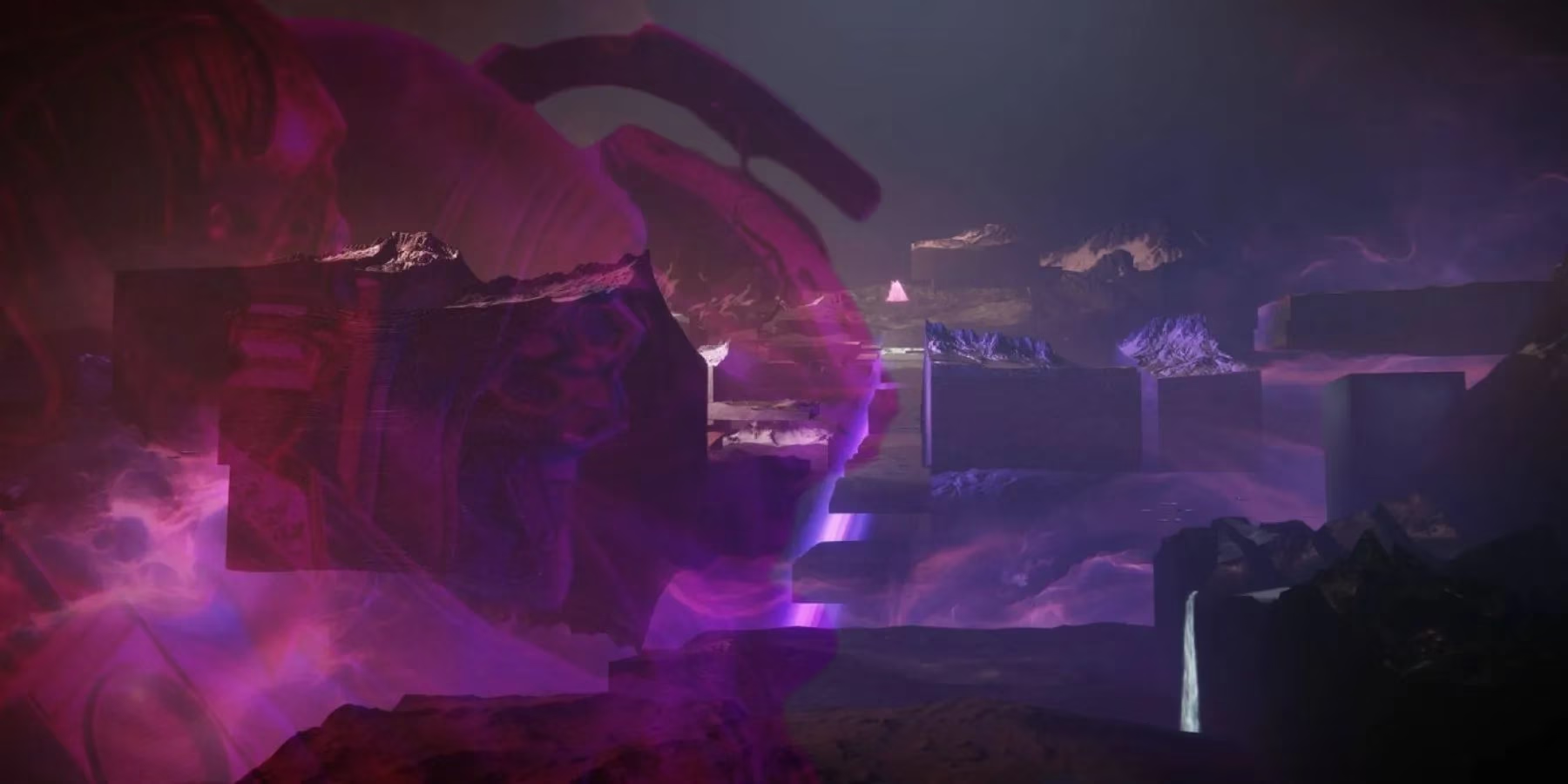
The core of this debate hinges on the monumental significance of The Final Shape itself. This expansion is not just another release; it is the narrative culmination of a decade-long saga. Bungie's relative silence about what lies beyond this endpoint has led many, including myself, to speculate. The shift from a seasonal model to a new episodic content structure—with longer, four-month narratives—feels like a potential transition into a final, sustaining phase for the game. When you combine this with the recent all-time low player engagement during Season of the Wish, it's understandable why some believe the era of grand, annual expansions may be concluding.
Arguments for The Final Shape Being the End of an Era:
-
Narrative Finality: The Final Shape promises to conclude the foundational Light vs. Darkness story that has driven Destiny for ten years. Continuing with similarly scaled expansions afterward could feel narratively forced or dilute this climax.
-
The New Episodic Model: The introduction of Episodes represents a fundamental shift in content delivery. These are designed to be larger and more substantive than seasons, potentially becoming the primary vehicle for all future storytelling and activities.
-
Community and Commercial Signals: Prolonged periods of low player counts and controversial updates can signal a need for a business model pivot. Sustaining a game with smaller, more frequent Episodes might be viewed as more sustainable than the massive, risky undertaking of yearly expansions.
However, abandoning yearly expansions and their iconic, pinnacle Raids would be a seismic shift—one that risks alienating the game's core PvE community. Raids are not just content; they are cultural events, community milestones, and a primary source of prestige and engagement. Their absence would create a void that Episodes alone may struggle to fill.
Why Yearly Expansions Might Endure (But Evolve):
Personally, I find it difficult to believe Bungie would completely abandon the expansion framework that has defined Destiny's biggest moments. Instead, I foresee an evolution. The lessons from The Witch Queen's success and Lightfall's shortcomings are clear: quality requires time. Bungie has already demonstrated this by extending the final season to ensure a polished launch for The Final Shape.
A plausible, and in my view, likely future could involve an extended development cycle. Imagine this post-Final Shape roadmap:
| Potential Future Content Cycle | Duration | Key Features |
|---|---|---|
| Major Expansion | Launch Point | New destination, core campaign, subclass updates, a new Raid. |
| Episode 1 | Months 1-4 | New story arc, activities, weapons, and gear. |
| Episode 2 | Months 5-8 | Continuation of the narrative, new exotic quests, sandbox updates. |
| Episode 3 | Months 9-12 | Another story chapter, seasonal event refreshes, PvP maps. |
| Episode 4 | Months 13-16 | Climax of the annual narrative, prep for next expansion. |
| Hype & Marketing Period | Months 17-18 | Teasers, ViDocs, and buildup for the next major release. |
This 18-month cycle, punctuated by four substantial Episodes, would allow Bungie the necessary development breathing room to ensure each major expansion meets the high bar set by The Witch Queen. It transforms the live-service calendar from a relentless sprint into a more sustainable marathon, with clear, high-impact milestones for players to anticipate.
Ultimately, the fate of Destiny 2's expansion model may well be tied to the commercial and critical reception of The Final Shape itself. A triumphant success could galvanize Bungie and prove the enduring demand for large-scale chapters. A disappointing reception, however, could accelerate a move towards a leaner, Episode-only future. As we stand on the precipice of this saga's end, one thing is certain: the shape of Destiny's future is the most compelling mystery yet. The community waits, hopes, and debates, all while preparing for one final stand within the Pale Heart of the Traveler.
Industry insights are provided by OpenCritic, where aggregated critical reception can help contextualize whether a tentpole release like The Final Shape lands as a true capstone or merely a transition point. Tracking how reviewers respond to its campaign payoff, endgame depth, and raid ecosystem will likely shape expectations for Bungie’s post-saga strategy—whether that means continuing annual expansions at a slower cadence or leaning harder into the new Episode model as the primary driver of Destiny 2’s long-term engagement.