In the vast, ever-evolving universe of Destiny 2, Bungie plays the dual role of architect and caretaker. As we stand in 2026, the studio's ongoing commitment to refining the player experience remains a constant, weaving bug fixes, community-driven changes, and the occasional, deliberate oversight into the fabric of the game's life as a service. The recent waves of updates, while often focused on technical polish, reveal a deeper story of a developer listening to its audience and sometimes choosing to let a little controlled chaos reign for the sake of fun.
The Art of the Hotfix
The lifeblood of any live-service game is its steady stream of patches, and Destiny 2 is no exception. Update 8.1.0.2 was a classic example of Bungie's meticulous housekeeping, sweeping through the game like a cosmic janitor with a very specific set of keys. It targeted a laundry list of gremlins that had crept into the experience:
-
🎬 Cinematic Glitches: An incorrect skybox during the poignant ending of The Final Shape was corrected, ensuring the emotional weight of the moment wasn't undercut by a visual hiccup.
-
🚫 Progress Blockers: Issues that could halt a player's journey in Episode Echoes—like abandoning the prologue quest or a Tonic Capsule causing a soft lock—were swiftly removed.
-
🎮 Activity Fixes: From ensuring all players get their rightful rewards in the intense Onslaught mode to fixing voiceovers in Major Fieldworks, the update smoothed the edges on core activities.
This patch was a symphony of small corrections, each note aimed at preserving the game's integrity. It was like tuning a grand, interstellar piano, ensuring every key struck the right chord for millions of players.
A Calculated Oversight: The Last Word's Wild West
Amidst this sea of fixes, one deliberate decision stood out like a lone gunslinger on the horizon. The exotic hand cannon, The Last Word, had been discovered to be dealing excessive damage in player-versus-player combat. Bungie fixed that imbalance, restoring order to the Crucible. However, in a move that sparked cheers from many Guardians, they intentionally left its enhanced damage against PvE enemies untouched.
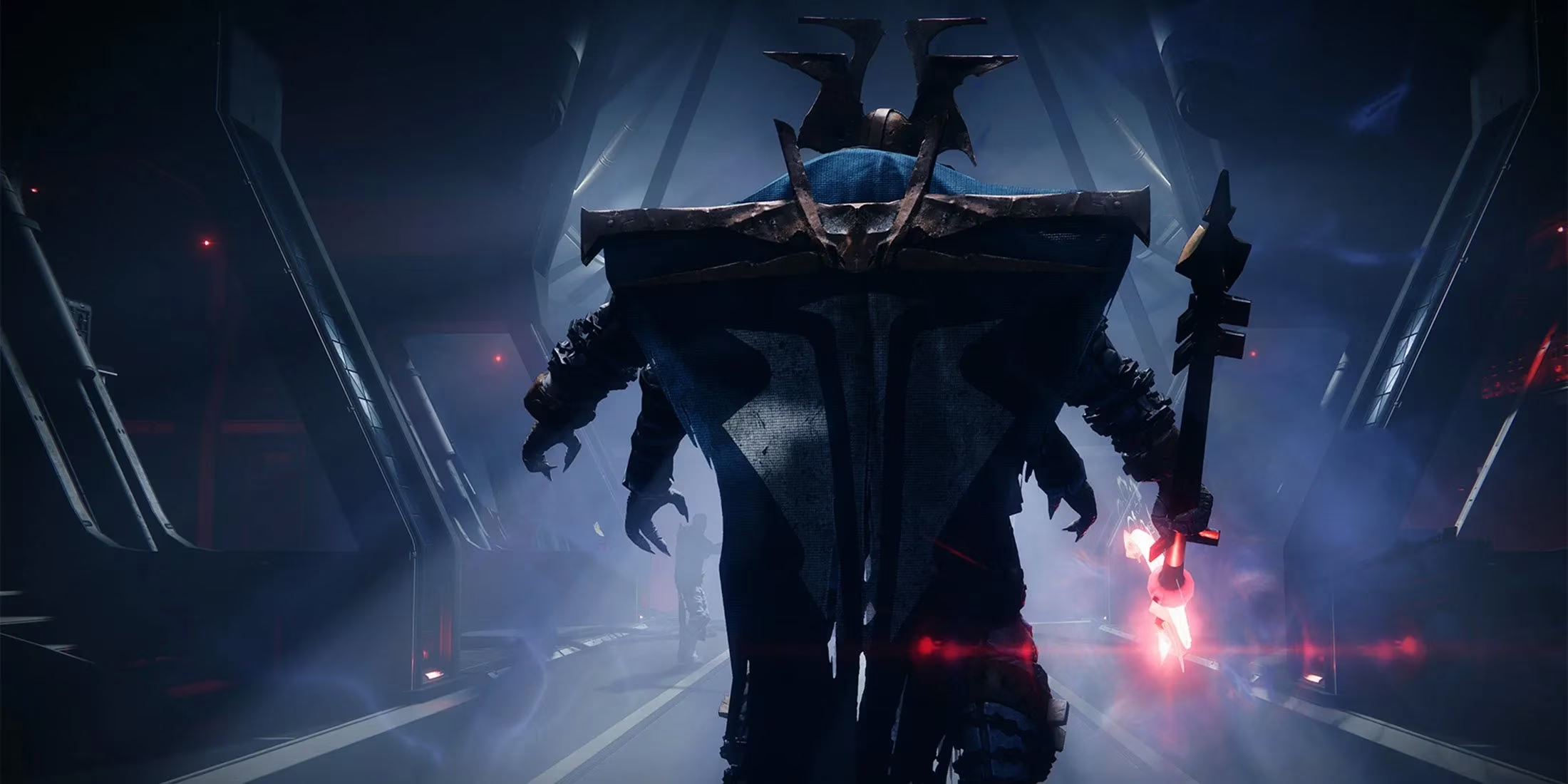
The message from the developers was clear: "Enjoy the PvE buff and yeehaw responsibly." This wasn't a bug; it was a feature by omission. In the PvE sandbox, The Last Word was allowed to remain a damage-dealing monster, a roaring engine of destruction against the game's alien hordes. It became a temporary gift, a spark in the tinderbox of the usual meta, encouraging players to revisit a classic weapon and revel in its newfound power against the Darkness.
Bending the Arc: Listening to the Player's Song
Perhaps more telling than any bug fix was how Bungie demonstrated its willingness to reshape future content based on community feedback. The initial structure of Episode Echoes had drawn criticism for its slow, time-gated story rollout, which felt like watching a glacier carve a canyon—impressive in scale but frustratingly slow to witness.
In direct response, Bungie announced a fundamental change for the upcoming Episode Revenant. The planned three-week staggered release for Act 1 was scrapped. Instead, the entire narrative chapter would be delivered at once, allowing players to consume the story at their own pace. This shift acknowledged that in a world of on-demand entertainment, player agency is paramount. It was a course correction plotted by the stars of community sentiment.
This adaptive philosophy extended to other scheduling, such as the slight delay of the Iron Banner within Revenant to late November, ensuring its launch would have the appropriate space and focus.
The Unwritten Patches: Stealth Balances
Not all changes make the official parchment of patch notes. Following the update, the Destiny 2 Team revealed a significant, unlisted adjustment: boss-level enemies now build "progressively higher damage resistance" to rapid, successive Solar ignitions. This stealth nerf to a potent damage-strategy was like a silent update to the laws of physics within the game's universe—suddenly, stacking infinite Solar explosions became as ineffective as trying to melt a mountain with a match. The reaction from the community was mixed, a reminder that Bungie's caretaking sometimes involves pruning strategies that grow too dominant, even if those strategies are beloved.
Gear-Tuning: The Devil in the Details
The update also showed Bungie's fine-grained approach to weapon and armor balance, adjusting them with the precision of a master watchmaker:
| Item | Change | Impact |
|---|---|---|
| Sanguine Alchemy (Warlock) | Added a debuff icon. | Players can now clearly see when marked by an enemy, improving combat awareness. |
| Peacekeepers (Titan) | Fixed an issue granting persistent SMG damage buffs. | Restores intended balance to the exotic's perk. |
| Heavy Burst Hand Cannons & Revision Zero | Various adjustments. | Fine-tunes their performance in the broader sandbox. |
These adjustments, while technical, are crucial for maintaining the delicate ecosystem of Destiny 2's gameplay, where a single exotic can define a season's meta.
As Destiny 2 continues its journey into 2026 and beyond, Bungie's role remains complex. They are the mechanics who tighten every bolt, the gardeners who prune overgrowth, and sometimes, the curators who decide to leave one magnificent, slightly overgrown rose untouched for everyone to enjoy. Through patches both documented and hidden, and through a demonstrated ear for player feedback, they continue to steer the ship, ensuring that the world of Destiny 2 remains a place of both relentless challenge and, when the moment calls for it, unbridled, yeehaw-ing fun.