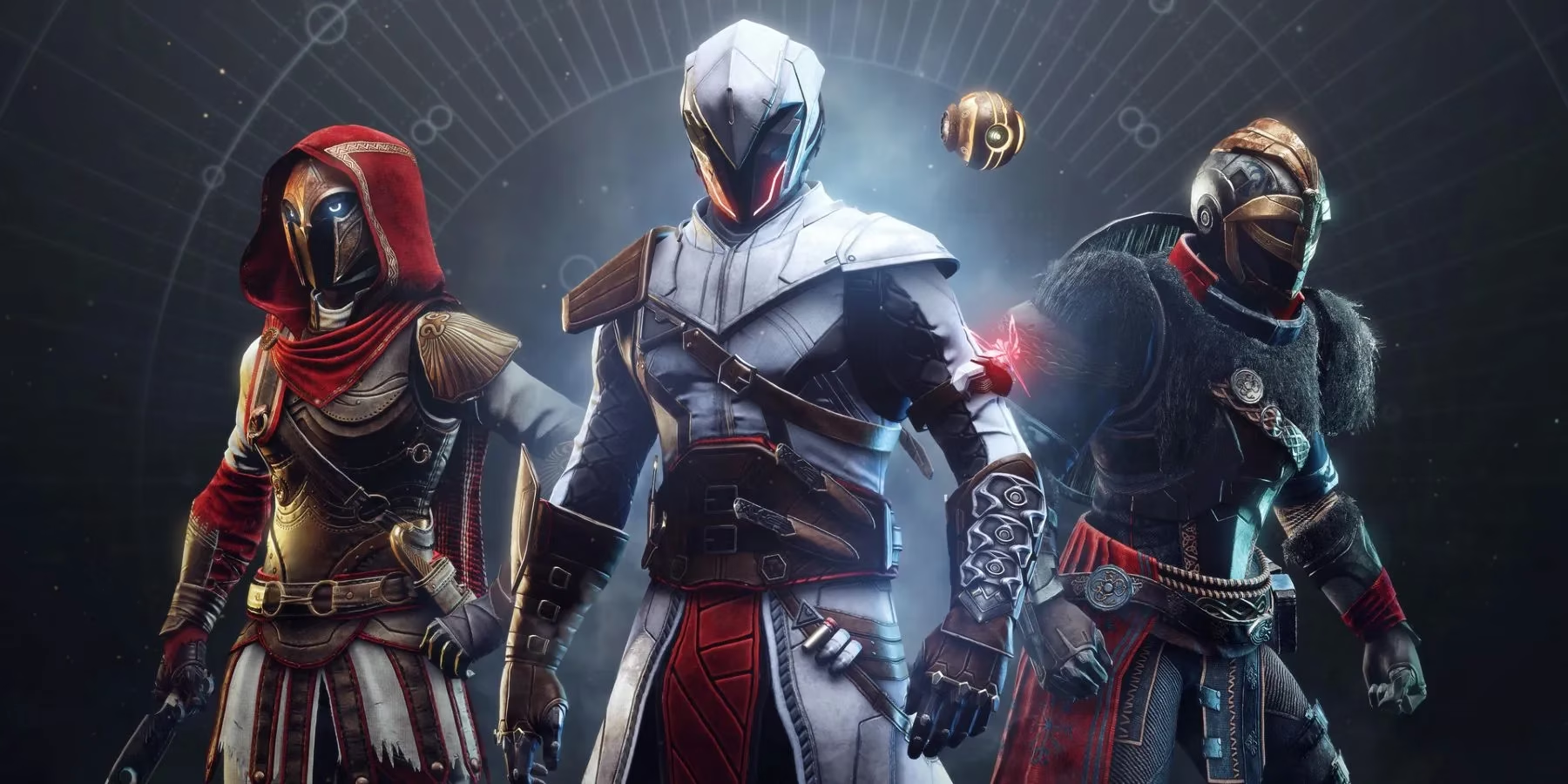
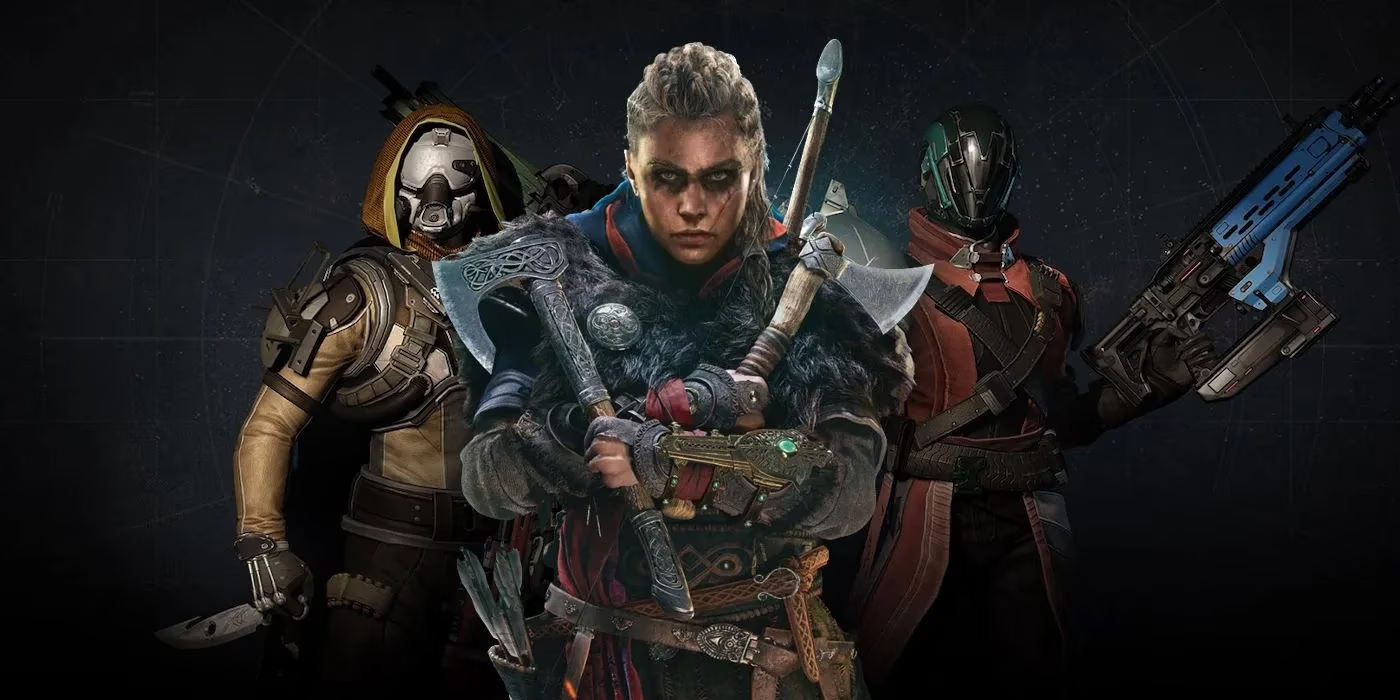
Video game crossovers often feel like novelty marketing stunts, but the Destiny 2 and Assassin's Creed Valhalla collaboration that shipped in December 2022 offered more than temporary cosmetic excitement. Bungie added a set of Ubisoft-inspired armor ornaments and weapons, including futuristic versions of Altaïr's, Eivor's, and Kassandra's Assassin robes. At first, the pairing seemed unusual. Assassin's Creed is famous for historical tourism across ancient and medieval settings, while Destiny 2 operates in a science-fantasy future defined by spaceflight, alien empires, and paracausal power.
Yet the crossover revealed something deeper. It showed that a futuristic Assassin's Creed setting is not only possible, but could benefit directly from the narrative structure Bungie has refined over years of Destiny content.
Shared Science Fiction Roots
The franchises share more than players might expect. In Assassin's Creed lore, the Isu were an ancient humanoid species with advanced cities, powerful technology, and a deep influence on human mythology. Their civilization was destroyed by the Great Catastrophe and a war between humanity and the Isu. In Destiny 2, the Golden Age represents a similar peak. Human civilization expanded across the solar system, technology flourished, and the Traveler helped usher in an era of prosperity. That era ended with the Collapse, when the Darkness arrived and devastated human worlds, leaving a fragile Last City on Earth.
In both universes, a lost golden era creates the conditions for endless modern conflict. Ancient technology, forgotten knowledge, and ideological warfare shape the present. This structure is why a Destiny-inspired future could work for Assassin's Creed.
| Lore Element | Assassin's Creed | Destiny 2 |
|---|---|---|
| Advanced precursor era | Isu civilization | Golden Age |
| Cataclysmic collapse | Great Catastrophe | The Collapse |
| Relics and lost technology | Pieces of Eden | Golden Age tech and engrams |
| Ongoing ideological conflict | Assassins versus Templars | Guardians versus forces of Darkness |
A Future Setting Could Use Destiny 2 as a Model
If Ubisoft ever pushes Assassin's Creed into the future, modeling the world after Destiny 2 would make sense. The Assassin-Templar conflict, which has always thrived on secrecy, shadow influence, and control of powerful artifacts, could be adapted to a sci-fi environment. Instead of fighting over ancient relics in historical cities, factions could battle for control of orbital stations, ruined colonies, or recovered Isu technology in hostile frontiers.
However, there is a major obstacle: the Animus. The Animus is built to explore ancestral memories from the past. A futuristic game cannot simply plug a character into the Animus and visit a time that has not happened yet. That limitation forces the series to make a dramatic narrative shift.
The Present-Day Story Needs to Lead
To make a futuristic Assassin's Creed setting work, Ubisoft would need to move its present-day storyline forward. Since the Animus can only access ancestral memories from the past, a truly futuristic setting would have to exist outside the machine. That means giving the modern or future story much more weight. After Desmond Miles, the present-day narrative has often felt secondary to the historical adventures. A leap into the future would change that balance entirely.
In a future setting, the Animus could become a central source of tension rather than a convenient plot device. If memory extraction technology in Assassin's Creed were treated like the Soulkiller program in Cyberpunk 2077, the stakes would rise dramatically. Soulkiller can digitally copy or steal a person's consciousness. A similar risk in Assassin's Creed would make the Animus dangerous, intrusive, and ethically complicated. Combining that with a Destiny-style world where humanity is struggling against extraterrestrial threats would finally make present-day sequences feel as important as the historical ones.

What a Futuristic Game Could Look Like
A futuristic Assassin's Creed could keep the series' core pillars while changing the environment. Urban parkour could move through vertical megastructures and derelict stations. Stealth tools could evolve into cloaking devices, drone hacking, or low-gravity traversal. The hidden blade could return as an energy-based weapon or a nanotech blade. Faction bases could be hidden in asteroid colonies or under the surface of a terraformed world.
Important features might include:
-
A modern-day protagonist with a larger role outside the Animus
-
Isu ruins on other planets or moons
-
A Templar-controlled corporation that regulates memory technology
-
Assassin hideouts hidden in deep-space installations
-
Narrative tension around digital memory, identity, and free will
These changes would not erase the historical identity of the series. They would expand it. The past still matters because recovered memories could unlock ancient Isu secrets needed to survive a future conflict. That creates a natural link between old and new.
Conclusion
The Assassin's Creed and Destiny 2 crossover initially looked like a cosmetic collaboration between two very different franchises. But the parallels between Isu history and the Golden Age reveal a strong narrative foundation for a futuristic Assassin's Creed. The idea is not to copy Destiny 2, but to learn from its world-building, its sense of ruined grandeur, and its ability to make futuristic struggles feel mythical.
If Ubisoft eventually takes that leap, the sci-fi Assassin robes from the crossover may no longer be just a promotional item. They could become the first visual proof of a direction the series was always capable of exploring.