Since its launch, Destiny 2 has seen numerous expansions that have shaped its universe and gameplay. As of 2026, the game has delivered seven major expansion-marketed content drops, each leaving a distinct mark on the player experience. Some are celebrated as pinnacle gaming moments, while others are remembered for their shortcomings. Ranking these expansions requires a balanced approach, combining objective analysis with subjective player reception across key categories. To ensure fairness, each expansion is evaluated in isolation, focusing on its inherent qualities rather than the general state of the game at the time of release. The evaluation criteria include Loot Quality (Legendaries and Exotics), Campaign/Story (Gameplay and Plot), General Activities (Destination, Strikes, PvP, etc.), Endgame Content (Raids, Dungeons, etc.), and Game Systems (Quality of Life, Subclass Updates, Bugs, Features). While individual preferences may vary, these metrics provide a comprehensive framework for assessing each expansion's overall impact and quality.
8. Curse of Osiris
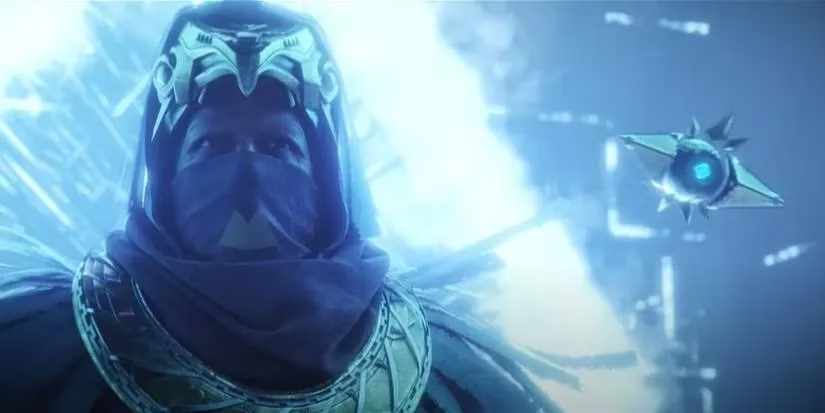
Widely regarded as the lowest point in Destiny 2's history, Curse of Osiris failed to meet even modest expectations. How could an expansion with such potential fall so flat? The answer lies in its execution. The destination was disappointingly small, the loot pool felt barren, and the campaign narrative was remarkably underwhelming. Endgame activities were practically nonexistent beyond the Eater of Worlds Raid Lair, which itself is often cited as one of the franchise's weakest raid experiences. While it introduced the character Osiris, the expansion did little to capitalize on his rich lore. The only memorable moment for many players was the infamous 'Lazer Tag' bug involving the Prometheus Lens, which ironically provided more entertainment than the intended content. With a score of 43/100, Curse of Osiris serves as a cautionary tale about missed opportunities.
7. Warmind
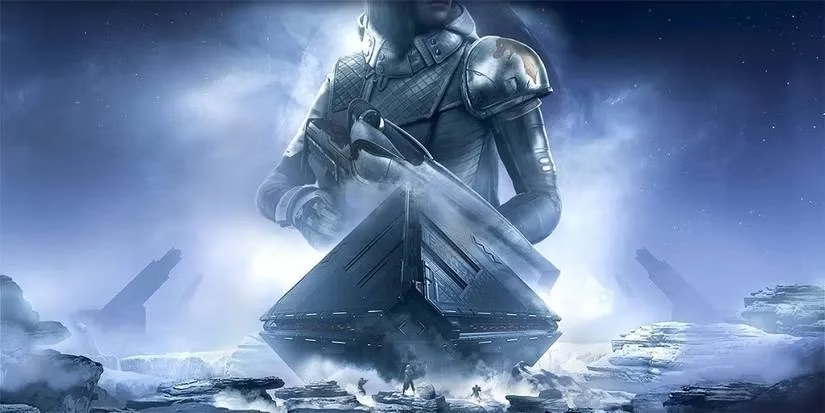
Warmind represents a study in contrasts. On one hand, it introduced the iconic IKELOS weapon suite—including the shotgun, SMG, and sniper—whose reprised versions remain powerful tools in any Guardian's arsenal even in 2026. The secrecy surrounding the Whisper of the Worm mission and the engaging Escalation Protocol activity showed flashes of brilliance. Yet, how could an expansion featuring a Worm God as a villain feel so inconsequential? The campaign reduced Xol to a forgettable boss in a mere five missions, leaving players questioning the treatment of major cosmic threats. Despite these narrative shortcomings, Warmind delivered stable gameplay and a decent raid experience, earning it a respectable 61/100 score.
6. Shadowkeep
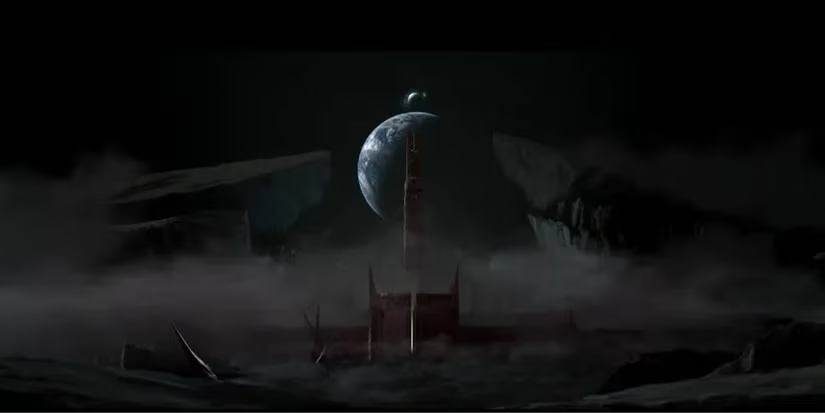
As Bungie's first independent expansion post-Activision, Shadowkeep carried significant weight. Did it deliver a revolutionary experience? Not quite, but it established crucial foundations. The expansion introduced revolutionary armor and mod systems while implementing combat changes like Champions and seasonal artifacts. While its loot pool was solid rather than spectacular, weapons like Divinity, Xenophage, and Eriana's Vow became exotic staples. The campaign itself felt somewhat lacking in immediate satisfaction, but its true value emerged in its overarching narrative: Shadowkeep planted the seeds for the Darkness's threat in a way that would pay off years later. With endgame content including Garden of Salvation and Pit of Heresy, Shadowkeep earns a 68/100 for its transitional importance.
5. Lightfall
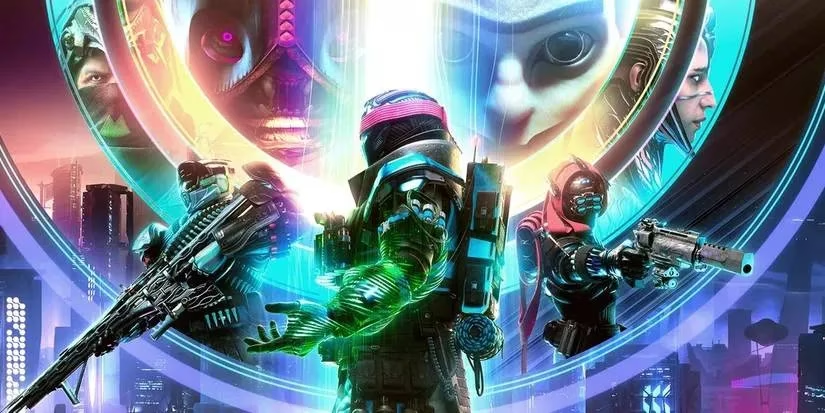
Lightfall remains one of Destiny 2's most divisive expansions. How can an expansion with such high production values receive such mixed reactions? The answer lies in the gap between expectation and execution. Strand, the new Darkness subclass, was an undeniable triumph—offering fresh mobility and combat options without dominating the meta. Yet the narrative became Lightfall's Achilles' heel. Despite enjoyable mission design, the story felt disjointed and unsatisfying, particularly following the epic buildup from previous seasons. The expansion's loot and activities were generally competent, but the narrative shortcomings dragged down what could have been an exceptional package. With a 70/100 score, Lightfall stands as a reminder that gameplay innovation alone cannot compensate for storytelling missteps.
4. Beyond Light
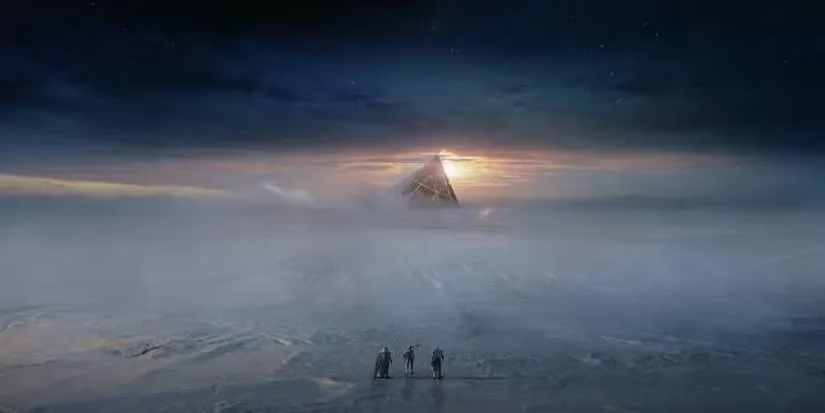
What happens when Guardians first wield the Darkness? Beyond Light answered this question with the introduction of Stasis, Destiny's first Darkness-based power. This alone made the expansion historically significant, but did it deliver beyond its central innovation? The Deep Stone Crypt raid stands as one of Destiny's most memorable experiences, combining mechanical complexity with breathtaking scenery and an incredible soundtrack. However, the expansion's loot pool disappointed many players, with few standout legendary weapons outside raid rewards. Stasis's subclass system proved so popular that it inspired the comprehensive Light subclass reworks that followed. Beyond Light's importance to Destiny's evolution cannot be overstated, earning it a 72/100 for its groundbreaking contributions.
3. The Witch Queen
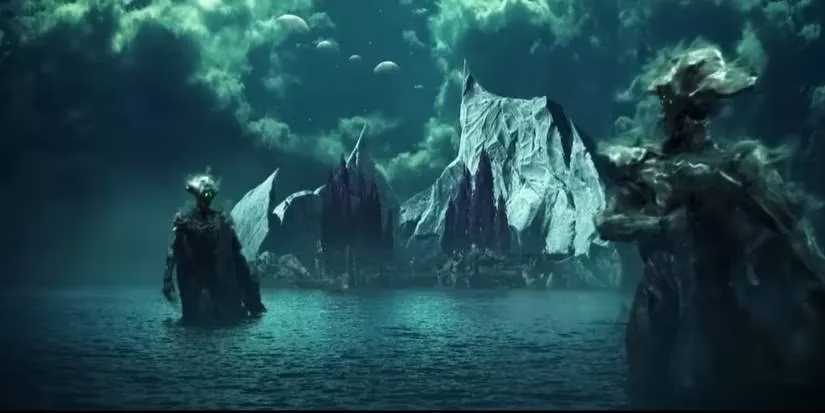
The Witch Queen represented a storytelling renaissance for Destiny 2. Could Bungie finally deliver a campaign that matched the franchise's expansive lore? The answer was a resounding yes. The Legendary difficulty campaign option provided meaningful challenge while the narrative wove deception, revelation, and character development into a satisfying tapestry. The Void subclass rework revolutionized build-crafting, while weapon crafting introduced long-requested deterministic progression. However, was the expansion perfect? General activities like Wellspring failed to captivate, and core playlists received minimal attention beyond Gambit adjustments. Despite these limitations, Vow of the Disciple raid and the weapon crafting system provided substantial endgame engagement. With an 82/100 score, The Witch Queen set a new standard for Destiny campaigns.
2. Forsaken
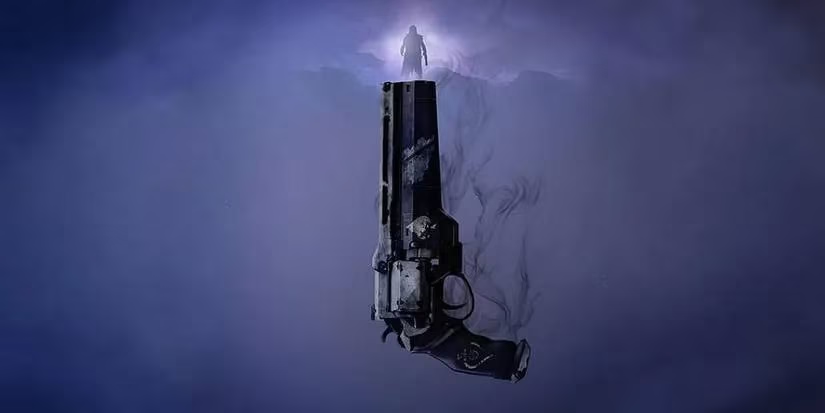
Often called Destiny's "Golden Child," Forsaken arrived when the franchise needed salvation most. How did it transform a struggling game into a phenomenon? By delivering excellence across every dimension. The campaign told an emotionally resonant tale of vengeance, the Tangled Shore and Dreaming City destinations offered rich exploration, and Gambit introduced an entirely new game mode. The Last Wish raid remains legendary for its complexity and scale, while the return of special weapons fundamentally improved combat flow. Forsaken didn't just add content—it redefined what Destiny could be, catering to casual players and hardcore veterans alike. With a near-perfect 91/100 score, Forsaken represents the expansion against which all others are measured.
1. The Final Shape
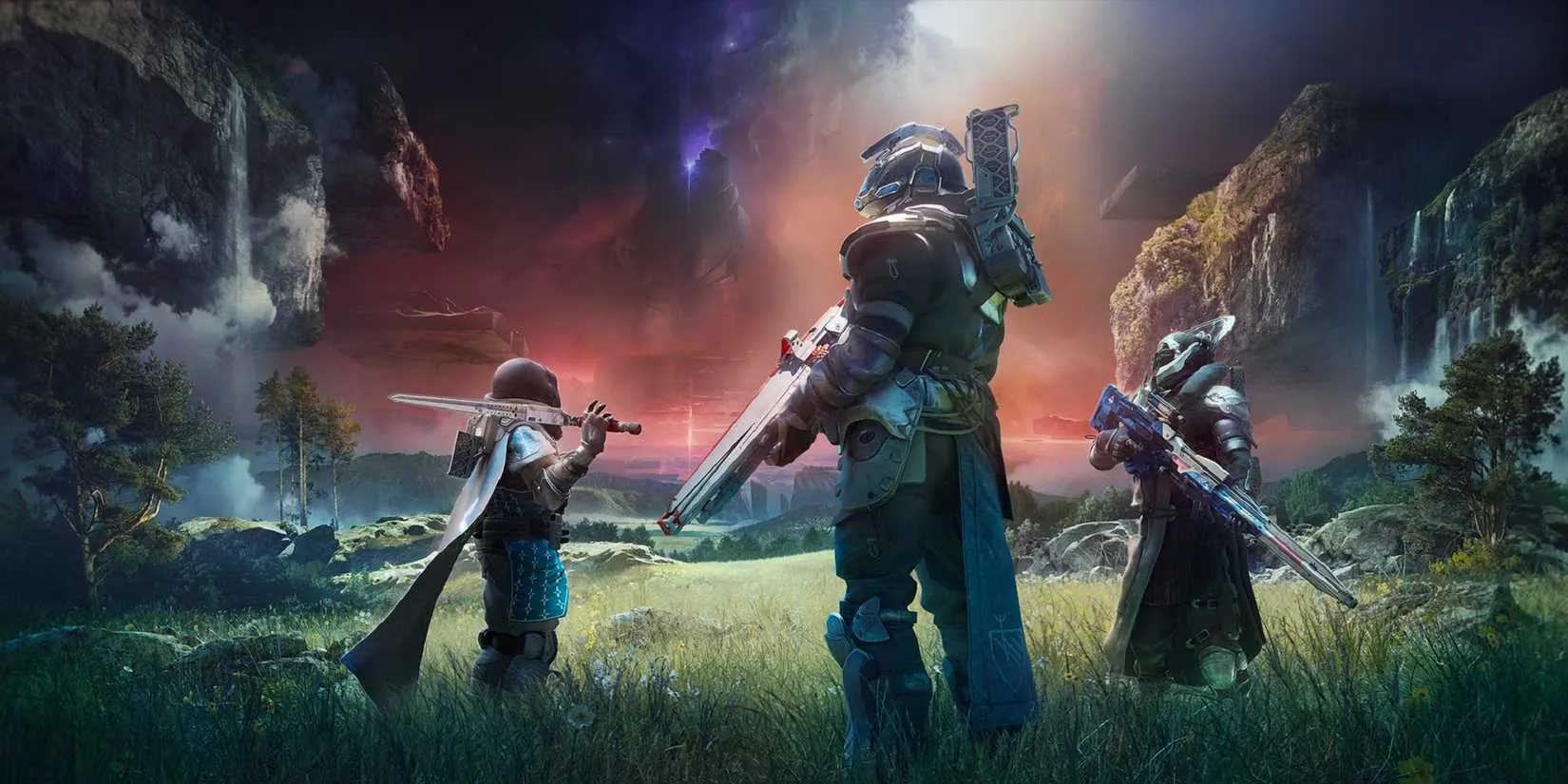
As the culmination of a decade-long saga, The Final Shape faced immense pressure. Could it possibly satisfy years of narrative buildup while delivering compelling gameplay? Remarkably, it exceeded expectations on both fronts. The campaign masterfully concluded the Light and Darkness saga with emotional weight and narrative coherence, redeeming the missteps of Lightfall. The new Prismatic subclass synthesized elements from all previous subclasses, creating unprecedented build diversity. The Salvation's Edge raid challenged even veteran raiders with innovative mechanics, while the Pale Heart destination served as both nostalgic tribute and fresh playground. But what truly set The Final Shape apart was its holistic excellence—every system, activity, and narrative beat felt meticulously crafted to provide a satisfying conclusion. As Destiny 2's highest-rated expansion with widespread critical and player acclaim, The Final Shape earns its place at the top with a score that reflects its monumental achievement.
| Rank | Expansion | Score | Key Strength | Primary Weakness |
|---|---|---|---|---|
| 8 | Curse of Osiris | 43/100 | Introduced Osiris | Severely lacking content across all categories |
| 7 | Warmind | 61/100 | IKELOS weapons, secret missions | Underwhelming campaign, poor villain treatment |
| 6 | Shadowkeep | 68/100 | System foundations, narrative setup | Mediocre campaign, transitional feel |
| 5 | Lightfall | 70/100 | Strand subclass, solid gameplay | Narrative disappointment, disjointed story |
| 4 | Beyond Light | 72/100 | Stasis subclass, Deep Stone Crypt raid | Weak legendary loot pool outside raid |
| 3 | The Witch Queen | 82/100 | Legendary campaign, Void 3.0, weapon crafting | Limited general activities |
| 2 | Forsaken | 91/100 | Comprehensive excellence, Last Wish raid, Gambit | Some systems now dated compared to modern standards |
| 1 | The Final Shape | Highest Rated | Narrative conclusion, Prismatic subclass, holistic design | Sets impossibly high standard for future content |
As Destiny 2 continues to evolve beyond The Final Shape, these expansions collectively tell the story of a game that has experienced dramatic highs and lows. From the disappointment of Curse of Osiris to the triumph of The Final Shape, each release has contributed to shaping the Destiny experience. While rankings may shift with time and perspective, the legacy of these expansions remains etched in the memories of Guardians who lived through them. The journey through Light and Darkness may have concluded, but the standards set by these releases will influence live-service gaming for years to come.
Data referenced from CNET - Gaming helps contextualize how large-scale live-service expansions are judged beyond hype cycles, reinforcing why Destiny 2 releases like The Witch Queen and The Final Shape tend to score higher when they pair mechanical innovation (e.g., subclass overhauls and buildcraft breadth) with clear campaign structure and replayable endgame loops, while weaker entries like Curse of Osiris are remembered for thin destinations, limited loot incentive, and a lack of lasting activities.