It’s 2026, and my ghost still hums with a melancholy frequency every time I fly into orbit. I’ve been playing Destiny since the alpha days on my dusty PS4, back when the promise of Bungie’s shared-world shooter felt like a golden age we’d only just begun to trace. I was there for the mediocrity of vanilla, the slow revival through The Taken King, and the triumphant stride of Destiny 2’s Forsaken era. Like thousands of other Guardians, I believed that the studio behind Halo had finally found its rhythm. Then Lightfall happened. More than three years later, I can still feel the aftershocks—not just in the game’s population charts, but in the way the community speaks about the future of the franchise. What was billed as the penultimate operatic movement turned into a parade of narrative cardboard, and the wound it left behind hasn’t fully healed.
Back in early 2023, the hype surrounding Lightfall was a supernova waiting to burst. We were marching toward the ultimate confrontation with The Witness, a villain whose silence had weighed on the universe like an executioner’s hood. Trailers promised a neon-soaked city under siege, a new Darkness subclass called Strand that would let us swing between skyscrapers like cybernetic Spider-Men, and a story that would finally pull the curtain back on the cosmic war. When the expansion launched, though, the silence turned into a deafening shrug. The campaign didn’t feel like a desperate battle for survival—it felt like a lazy Sunday drive through a tutorial. Learning Strand was akin to being handed a glowing puzzle box but never given the key; the lore never bothered to justify why this new power suddenly emerged, expecting us to nod along while genocide loomed at our doorstep.
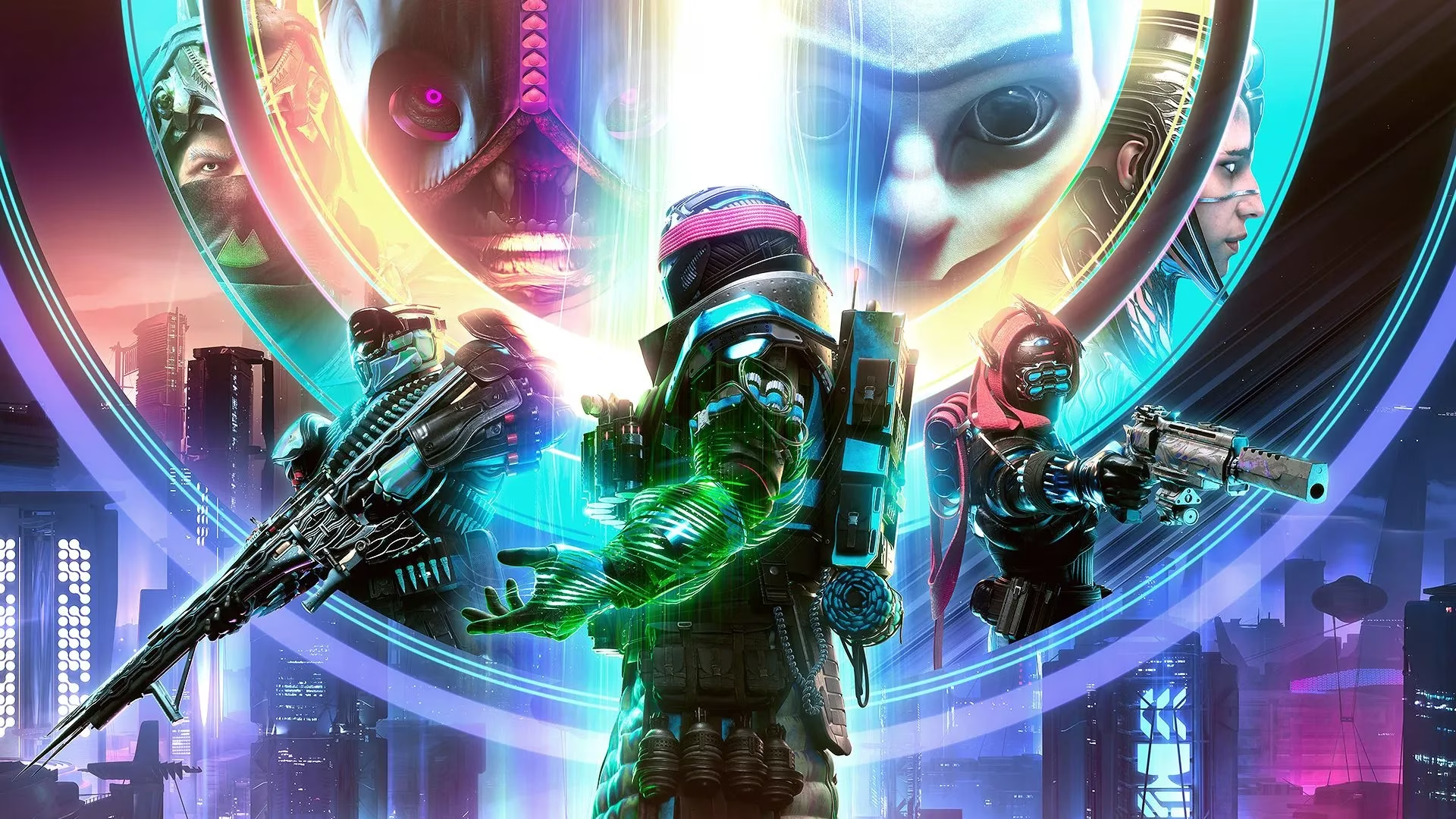
Each mission became a string of instructions delivered by characters who yapped in my ear like panicked sports commentators without ever saying anything meaningful. The tone was wrong—instead of tension, we got quips. Instead of sacrifice, we got neon popcorn. I’d spent years standing beside Zavala, Ikora, and Eris Morn, and during Lightfall they all felt like cardboard standees. Nobody checked in once we got to Neptune; nobody questioned our presence back at the Tower while the solar system was literally burning to the ground. It was the narrative equivalent of a beautiful shag carpet draped over a black hole—eye-catching from a distance, but step on it and you’d find nothing underneath but cold emptiness.
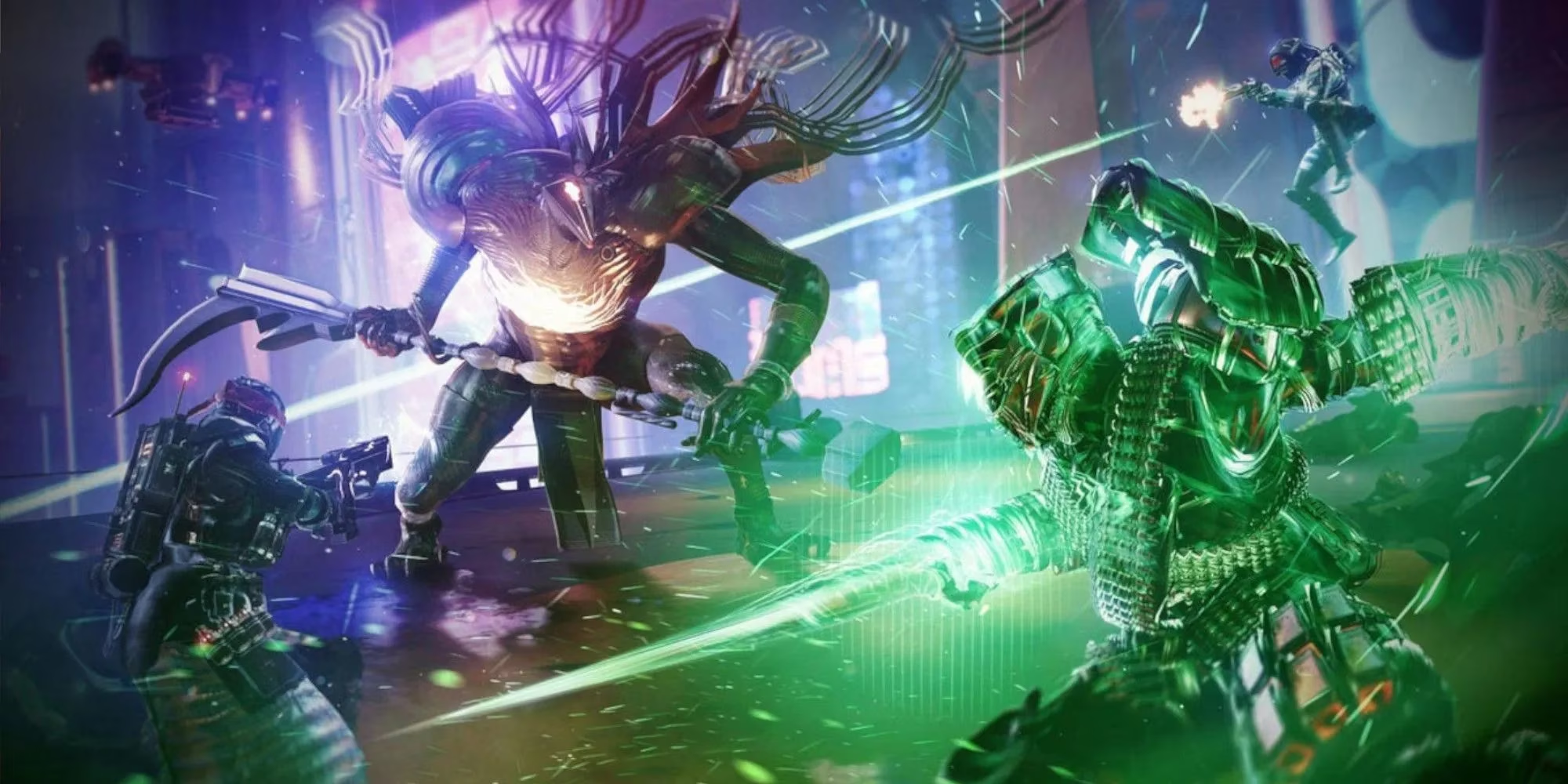
The gameplay loop, once a glorious feedback mechanism of shooting and looting, had curdled into repetition without reward. Missions asked me to follow a waypoint, kill everything, and wait for the next radio chatter to explain what I was doing. The new locale, Neomuna, was supposed to be a gleaming metropolis filled with secrets, but it often felt like a movie set where the facades were painted on and the doors never opened. Even the raid, which visually hinted at a final showdown against a disciple of The Witness, resolved with a narrative whimper that left my fireteam staring at the loot screen in collective disbelief. We weren’t angry—we were exhausted, like passengers watching a captain steer a ship directly into the only reef in a calm sea.
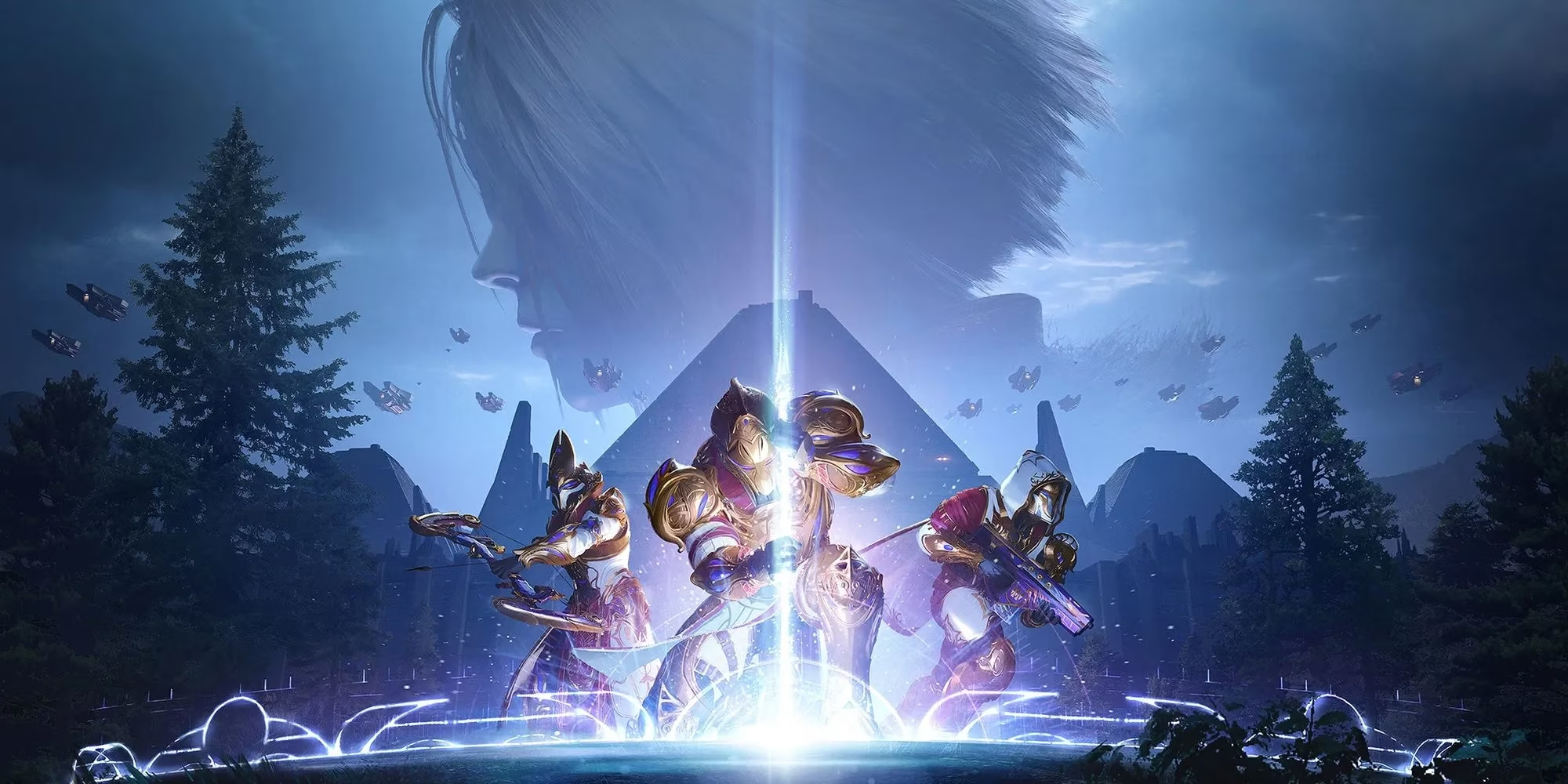
The seasonal content that followed, Season of Defiance, was supposed to patch the wounds. Instead, it poured salt into them. The key art showed our allies ready to take back Earth, but the actual missions recycled so many assets and ideas that it felt like Bungie was serving us yesterday’s meal on a fancier plate. I remember logging in week after week, hoping for a jolt of meaning, and finding only a hollow hamster wheel painted in the colors of insurrection. The community’s response was swift and scalding. Forums erupted with comparisons to the disastrous storytelling of vanilla Destiny 2, and player counts began a downward drift that, even now in 2026, hasn’t completely leveled off.
What made the failure so galling was that Bungie had already learned this lesson. The original Destiny’s launch was a monument to wasted potential—a disjointed narrative cobbled together from scrapped storylines, held aloft only by a magnificent raid and the hypnotic pull of gunplay. I was there for that beta fear, that Kotaku report revealing how much content had been thrown out, and the community’s abject denial. It took The Taken King to prove that a coherent villain and a cast you actually believed in could turn a looter shooter into magic. And then Bungie did it again with Forsaken. So why, after all those hard-won scars, did Lightfall feel like a meticulously documented tribute to past mistakes? Watching it unfold was like seeing a master chef who had finally earned a third Michelin star suddenly panic and burn the signature dish right before serving it, then serve it anyway with a distracted smile.
In the years since, Bungie has tried to recalibrate. The Final Shape in 2024 brought the Light and Darkness saga to a close, and while it delivered a more emotionally resonant finale, it couldn’t fully erase the memory of the chapter that came before. Many of my friends never returned. The clan roster that once glowed with dozens of concurrent players now boasts a familiar handful. The damage wasn’t just to a single expansion’s reputation—it was to the trust that two generations of Guardians had invested. We stuck around through content droughts, sunsetting, and rewired systems because we believed Bungie had a plan. Lightfall demonstrated that sometimes the plan is just a sketch on a napkin that got mistaken for scripture.
Now in 2026, Destiny 2 continues to evolve, with episodes replacing seasons and a new frontier of stories being teased. The gunplay remains peerless, the art direction stunning, and the music still capable of summoning goosebumps from my jaded skin. But ever since that Lightfall shipwreck, I play with a lingering wariness, a quiet voice that asks after every mission: Is this going to matter, or am I just filling time? The answer, more often than I’d like, is the latter. Bungie built a universe that once felt inexhaustibly deep, and then they showed us just how thin the bottom could be. A decade of memories can’t be undone by a single disaster, but it can be tinted by it. And though my Ghost still hums, its tune is no longer a promise—it’s a question I’m no longer sure Bungie knows how to answer.