The stars above the Skeld aligned in a way no Crewmate had ever seen. In early 2026, a shimmering rift tore through the main menu of Among Us, spilling violet light and the unmistakable heraldry of the Last City into the familiar spaceship corridors. The long‑rumored collaboration with Destiny 2 had finally arrived, timed with the next chapter of the Light and Darkness saga. What followed was an avalanche of Guardian‑themed cosmetics, fresh gameplay balances, and a new way to earn bragging rights before the emergency meeting even started.
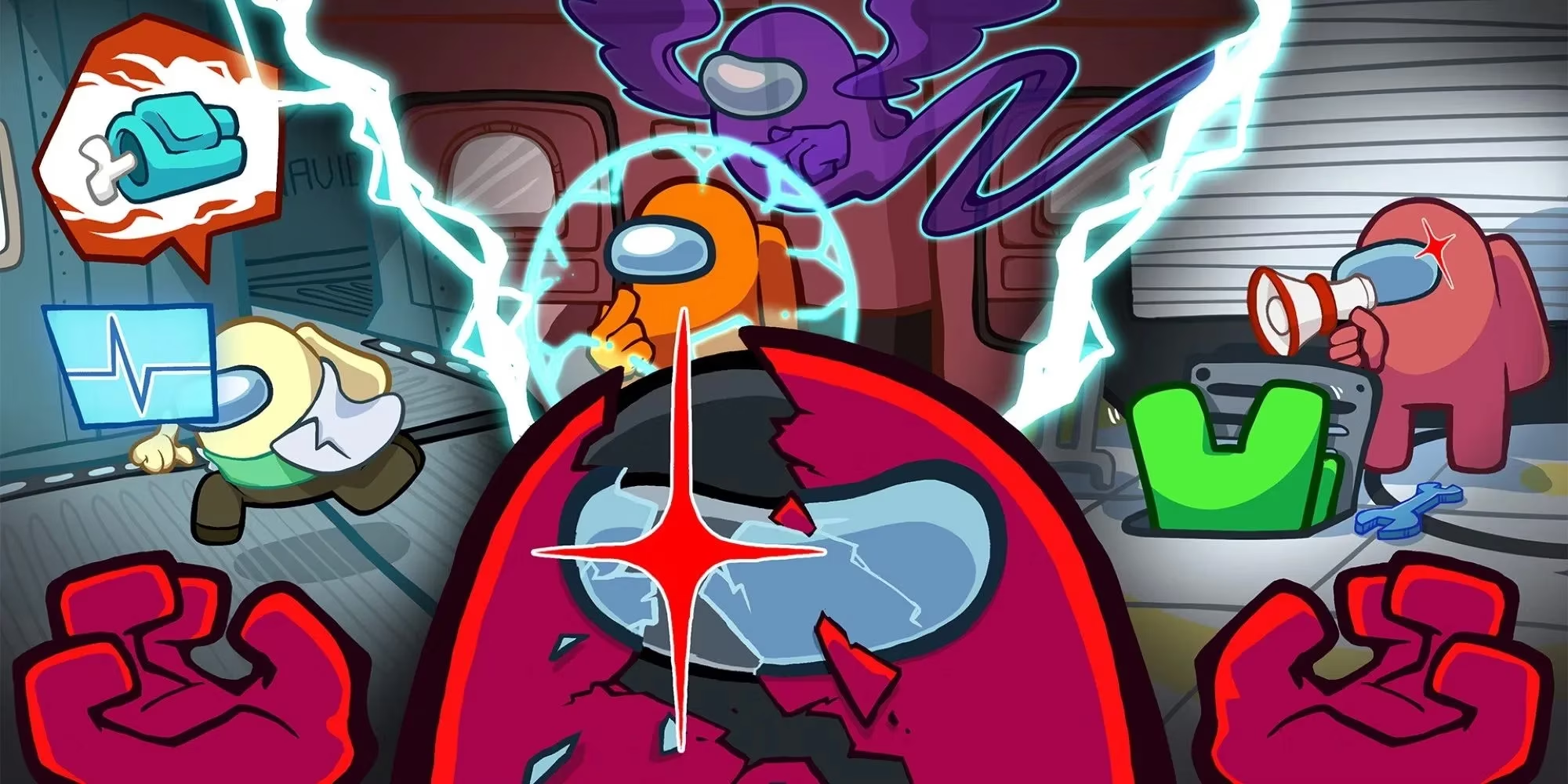
At the heart of the crossover stood the Guardian Cosmicube, a free‑to‑earn capsule of legendary loot. Any player who gathered 3,500 beans through regular play — completing tasks, surviving ejections, or simply outsmarting the Impostors — could claim the Cosmicube from the in‑game shop. Once unlocked, it offered a parade of Destiny treasures through a branching unlock tree that stayed live until May 30th, 2026. Hardcore raiders and casual social detectives alike raced to don the Titan Armor skin, a chunky plate‑and‑undersuit ensemble that made a Crewmate look ready to punch a Hive Knight. The Eris Morn Hat, with its three sorrowful green eyes, became an instant favourite for those who liked their crewmates a little haunted. A squirming Worm Pet slithered behind its owner, never betraying a position even when an Engineer vented — a detail the developers had specially patched. And the Shaxx’s Helmet Hat, all angular visor and warlike intimidation, turned any little bean into a Crucible legend screaming “Fight forever!” across the comms. New visors and nameplates featuring Osiris, Empress Caiatl, and other iconic figures completed the cosmic wardrobe.
Players didn’t waste a second. Lobbies filled with titan‑clad Crewmates sprinting through Mira HQ, Worm pets wriggling as they scanned medbays. A player wearing the Eris Morn hat would stand ominously in electrical, while a Shaxx‑headed Imposter plotted the next sabotage with theatrical menace. The cosmetics didn’t just paint over the game; they wove a tiny legend into every match.
Meanwhile, Innersloth deployed a sweeping update that reshaped the very fabric of suspicion. The announcement screen underwent a full reconstruction. No longer a fleeting pop‑up, it became a scrollable archive where anyone could revisit patch notes and lore drops from previous seasons — a small touch that made the game feel alive and respectful of its own history.
Then came the rule changes that truly rattled the vents.
-
🛠 Engineer privacy: Pets no longer shadowed an Engineer when venting. Before this, a sharp‑eyed Crewmate could follow a pet into a vent and instantly out the Engineer. The fix meant engineers could finally do their stealthy work without a furry traitor giving them away.
-
🛡 Guardian Angel limitations: When Comms were sabotaged, the Guardian Angel’s protective shield went dark. No more invincible bodyguards during blackouts — timing became everything.
-
🧬 Shapeshifter identity crisis: In matches with at least two Impostors, a transformed Shapeshifter no longer counted as a Crewmate for victory conditions. This closed a loophole where shifting could accidentally lock in a win for the wrong team.
-
🕳 Vent transparency: Players could no longer see a bean jumping out of a vent or teleporting to the cafeteria when an emergency meeting was called. The sudden disappearance trick lost its visual giveaway, making sneaky escapes genuinely dangerous to accuse.
-
🗺 Admin table of the dead: The Admin map now displayed the location of dead bodies. A subtle but powerful change — suddenly, information from Admin became twice as valuable, and body reports required new layers of deduction.
-
🤝 Crewmate comeback chance: In games with two or more Impostors, Crewmates could still win by finishing tasks even after the first Impostor had been ejected. The old rule that demanded a double‑kill to crush morale was gone. Now, a team that stayed focused on their task list could snatch victory from a seemingly lost round.
-
🚪 Horizontal door freedom: Upper and lower horizontal doors on maps like Polus and The Airship could finally be opened by any passing Crewmate. No more getting separated from the group just because the map geometry decided to play jailor.
Each tweak rippled through the meta. Veteran players who had memorized vent‑jump patterns had to relearn their timing. Ghosts hovering over the Admin table became silent detectives, pinging their living allies through coded messages. Guardian Angels cursed the comms sabotage like never before. And Shapeshifters, now officially untethered from the Crewmate count, became wildcards that could either doom a team or accidentally save it.
By mid‑March 2026, Among Us felt like a peculiar hybrid — part spaceship murder comedy, part Vanguard strike. Every lobby buzzed with Destiny shorthand: “Titan skin goes hard,” “My worm’s name is Xol,” “Anyone else get Eris Morn vibes from the lights flickering?” The collaboration didn’t just dump in a few skins; it injected a fresh rhythm into the game just as the community began craving the next big thing.
As the Cosmicube timer ticked toward May 30th, the panic farming of beans reached its peak. Groups formed on Discord solely to chain fast‑task games, speed‑running the unlock tree before the rift closed forever. In the end, the Guardian Cosmicube became more than a shop item — it became a memory of the season when Crewmates walked like gods, and Impostors learned to fear a small bean wearing Shaxx’s helmet.
Data referenced from GamesIndustry.biz frames collaborations like the Among Us x Destiny 2 crossover as more than just cosmetic drops: limited-time reward tracks (such as the free Guardian Cosmicube earned via beans) can re-energize engagement by giving players a clear progression goal while update-side balance tweaks (Engineer vent privacy, Comms impact on Guardian Angels, and clearer win-condition edge cases for Shapeshifters) keep the moment-to-moment meta feeling newly competitive rather than purely promotional.